
Portfolio · Bellevue, Washington
Curve Appeal: Boucle & Ambiance, Bellevue
A transitional commercial lounge transformed from a waiting area into a destination people seek out.
Commercial seating areas fail in a specific way. A single sofa against a plain wall. Overhead lighting on a dimmer. Nothing that communicates the space was designed for the people who use it. This 1,900-square-foot Bellevue commercial space was that exact situation before the redesign.
The brief was simple: make it a destination rather than a waiting area. The half-moon semi-circular boucle sofa was the organizing decision that made everything else possible.

One Sofa, One Decision, Everything Else Follows
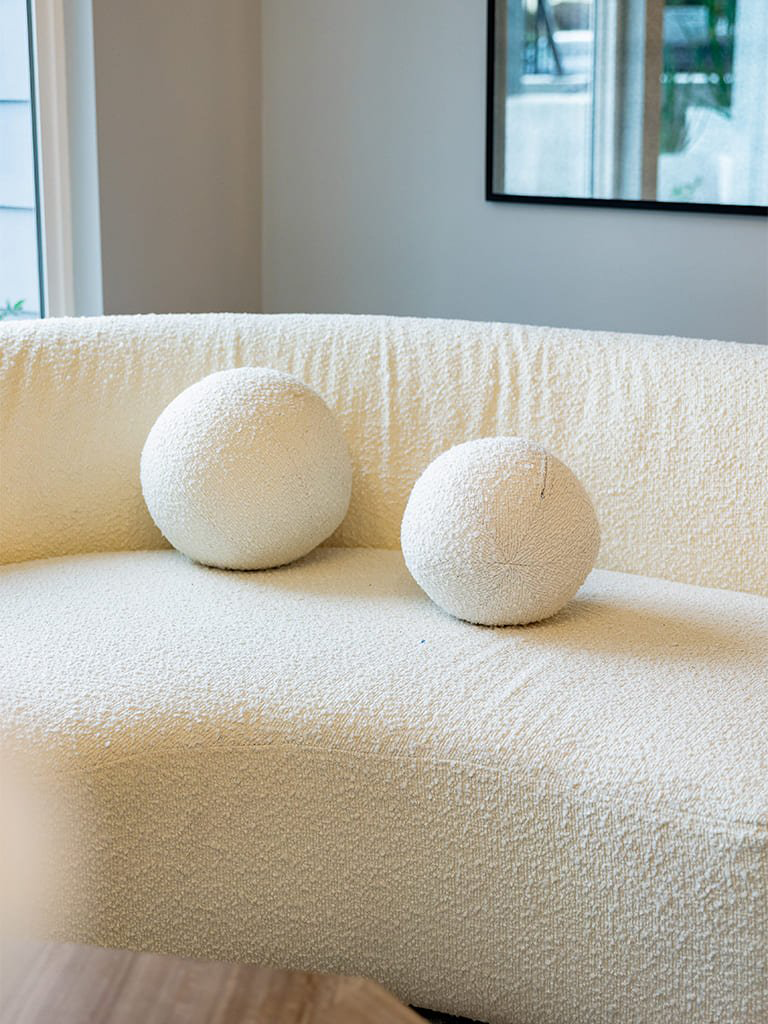
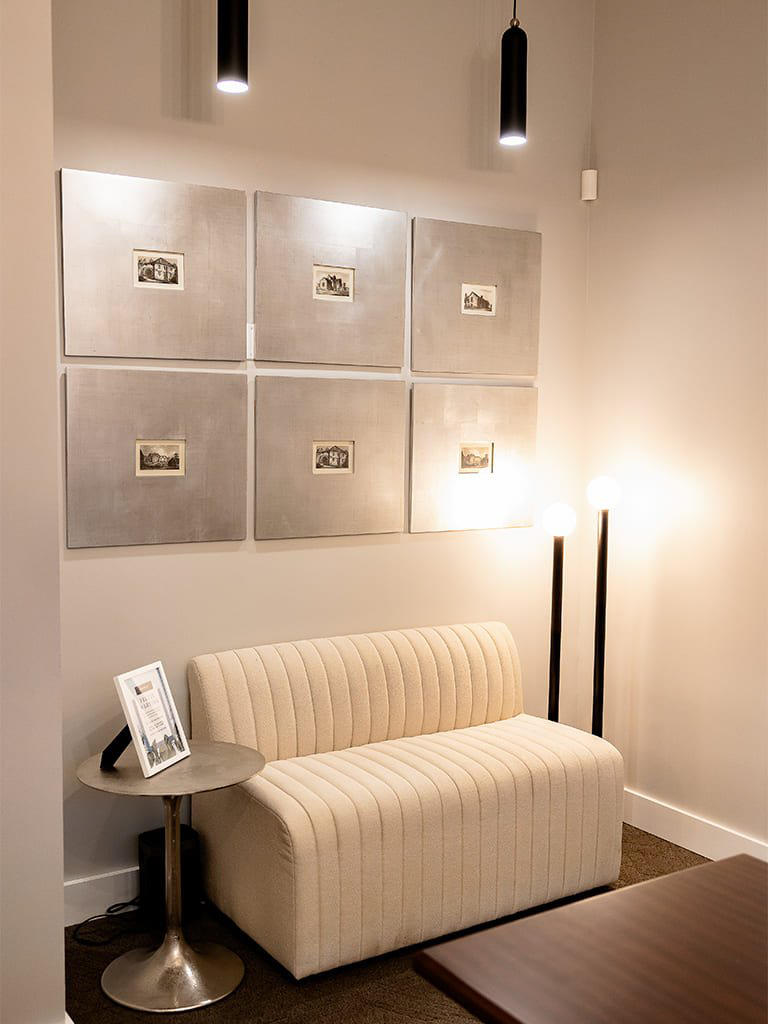
The half-moon semi-circular sofa is the organizing piece. A curved sofa in a rectilinear commercial room does two things simultaneously: it softens the hard geometry of the space, and it invites conversation in a way that a standard sofa against a wall does not. The boucle fabric introduces texture at the scale of the primary seating piece — visible from the moment you enter.
Clustered pendant fixtures are suspended directly above the sofa zone. The cluster creates a visual ceiling within the room — a canopy of light that defines the seating area and draws the eye to it from the entry. The clustering reads as a design decision rather than standard commercial lighting. Oversized art is scaled for the commercial ceiling height: at 1,900 square feet, a piece sized for a residential wall simply disappears.
Considering a Project?
The Work Begins With One Conversation
We hold a limited number of consultations each month and are selective about the projects we take on. If you’re ready to discuss yours, we’d like to hear about it.
The curved sofa softens the room’s geometry and invites conversation. The boucle texture is visible from the entry.
The Challenge
The Challenge Was Identity
The space was transitional — bridging a professional office environment with a clubhouse reception area. Neither identity was fully expressed, and the result was a zone that belonged to neither. The existing seating communicated afterthought: clients arriving had one sofa to choose from and walls with no visual interest.
The space was doing the opposite of what a well-designed transition zone should do: setting expectations downward rather than up. Every design decision needed to be a corrective that raised the register without crossing into a different aesthetic than the organization it represented.
“Clients arriving for appointments are greeted by a space that communicates quality before a single word is spoken.”
Our Design Approach
How We Extended the Light
Mirrors are placed to amplify the available light and extend the perceived depth of the space. In a commercial lounge with controlled daylight, mirrors do the work that additional windows would do — they multiply the light that exists rather than requiring more sources. The placement was deliberate: each mirror was positioned to catch both the pendant cluster above and the art beside it.
Gray textured wallpaper in the adjacent areas provides the background material depth that differentiates zones without requiring partition walls. The texture adds visual interest without color — which keeps the gray reading as neutral and the primary seating zone reading as warm.
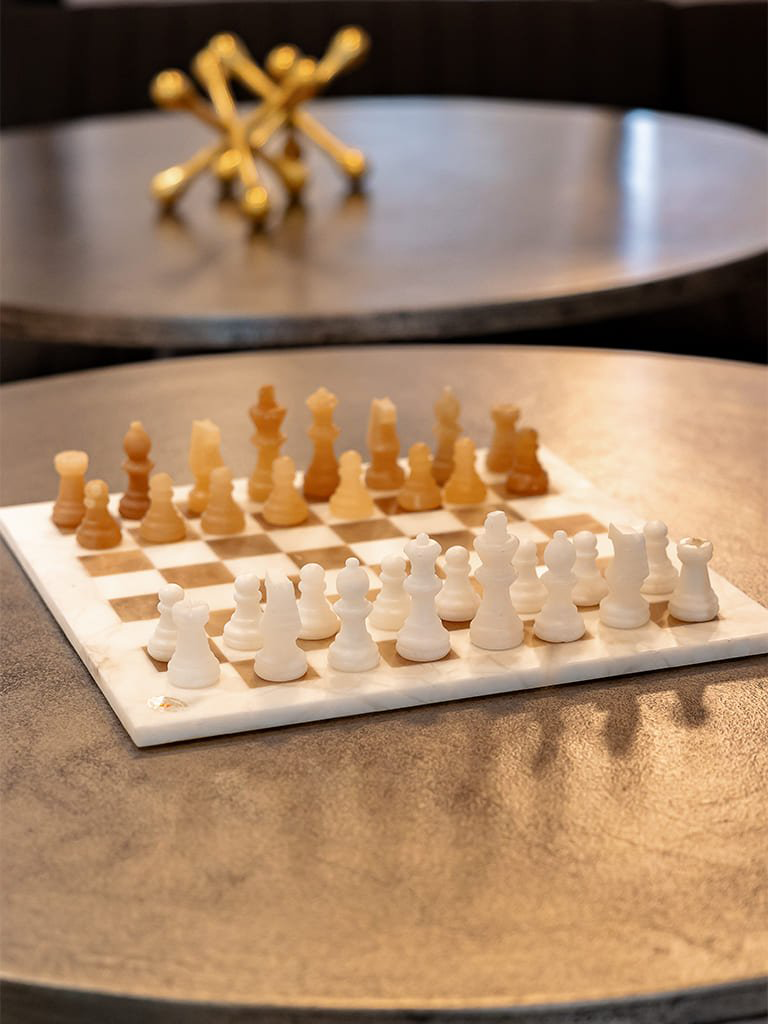
Decorative accessories — a geometric wooden coffee table, a curated chess set, rounded boucle cushions — are not afterthoughts. In a commercial lounge, accessories at this level of selection communicate the same thing the furniture does: that someone made deliberate choices about this space and thought about who would use it.

Project Type
Commercial Lounge Design
Location
Bellevue, Washington
Total Space
1,900 sq ft
Feature
Half-moon boucle curved sofa, clustered pendants
Art
Oversized statement piece scaled for commercial ceiling height
Scope
Full interior design: furniture, lighting, art, wallpaper, mirrors
Common Questions
Frequently Asked
The difference is whether the space communicates that someone thought about who would use it. A functional commercial seating area has chairs and a table. A welcoming one has furniture at the right scale, lighting that defines the zone rather than just illuminating it, art proportioned for the room, and surfaces that invite touch. Every element is a message to the person sitting in it about how the organization values their time. The design of this lounge was built around that premise: every decision was asked to communicate quality before anyone spoke.
Mirrors multiply whatever light source is nearest them. In this lounge, the mirrors were positioned to capture the pendant cluster above and the ambient light from adjacent areas — reflecting both back into the seating zone and into the far corners of the room. The effect is that the available light feels more distributed and more generous than it is. In a commercial space with fixed windows, this is the most efficient way to make the room feel brighter without adding electrical load or changing the envelope.
Yes — and transitional commercial spaces are some of the most high-impact projects we take on. A lobby or waiting area is the first designed environment a client or employee encounters. Whatever that space communicates — quality, thoughtfulness, care, or the absence of those things — sets the register for everything that follows. A well-designed waiting area changes how a meeting starts. We approach these projects with the same depth we bring to primary spaces, because the transitional moment often matters more than the destination room.
A curved form in a rectilinear room does two things: it softens the hard geometry of the space, and it creates an invitation to gather that a straight sofa against a wall doesn’t produce. A straight sofa reads as a row of seating — linear, directed, parallel to the wall. A curved sofa creates an interior — a facing, enclosing arrangement that invites conversation. In a commercial lounge where the goal is for clients to feel welcomed rather than processed, that distinction matters.
The first measure is the ceiling height and the wall width. In a 1,900-square-foot commercial space, the visual field is significantly larger than a residential room — which means a piece sized for a residential wall at that same height simply doesn’t register from across the room. The art needs to be proportioned to the wall it occupies: large enough to command attention from the entry, not so large that it overwhelms the furniture in front of it. The second measure is subject matter: in a commercial context, abstract or compositional work tends to be more universally readable than figurative or narrative content.
The work in this portfolio is the standard we hold ourselves to on every project — not just the celebrated ones. We take on a limited number of engagements each year, which means the projects we commit to receive our full attention from the first conversation through the final installation. If you’re considering a renovation, a new build, or a full redesign, tell us about your home. We’ll tell you honestly whether we’re the right fit — and what working together would look like.
Begin Your Project
Your home should stop you. Every time you walk in.