
Portfolio · Seattle, Washington
Beauty Without Barriers: An Aging-in-Place Bath
A couple who built decades of memories in a nearly 100-year-old Seattle home asked us to make staying possible — without making the bathroom feel like a hospital.
The husband’s mobility was declining. A wheelchair was on the horizon. The existing bathroom — narrow doorways, a tall-walled tub, a traditional fixture layout — wasn’t going to work. Selling and downsizing was the obvious option. The clients didn’t want the obvious option.
So we redesigned the bathroom to meet ADA standards without surrendering a single design decision to clinical convention. Every accessibility feature was treated as a design problem to solve beautifully, not a compromise to apologize for.
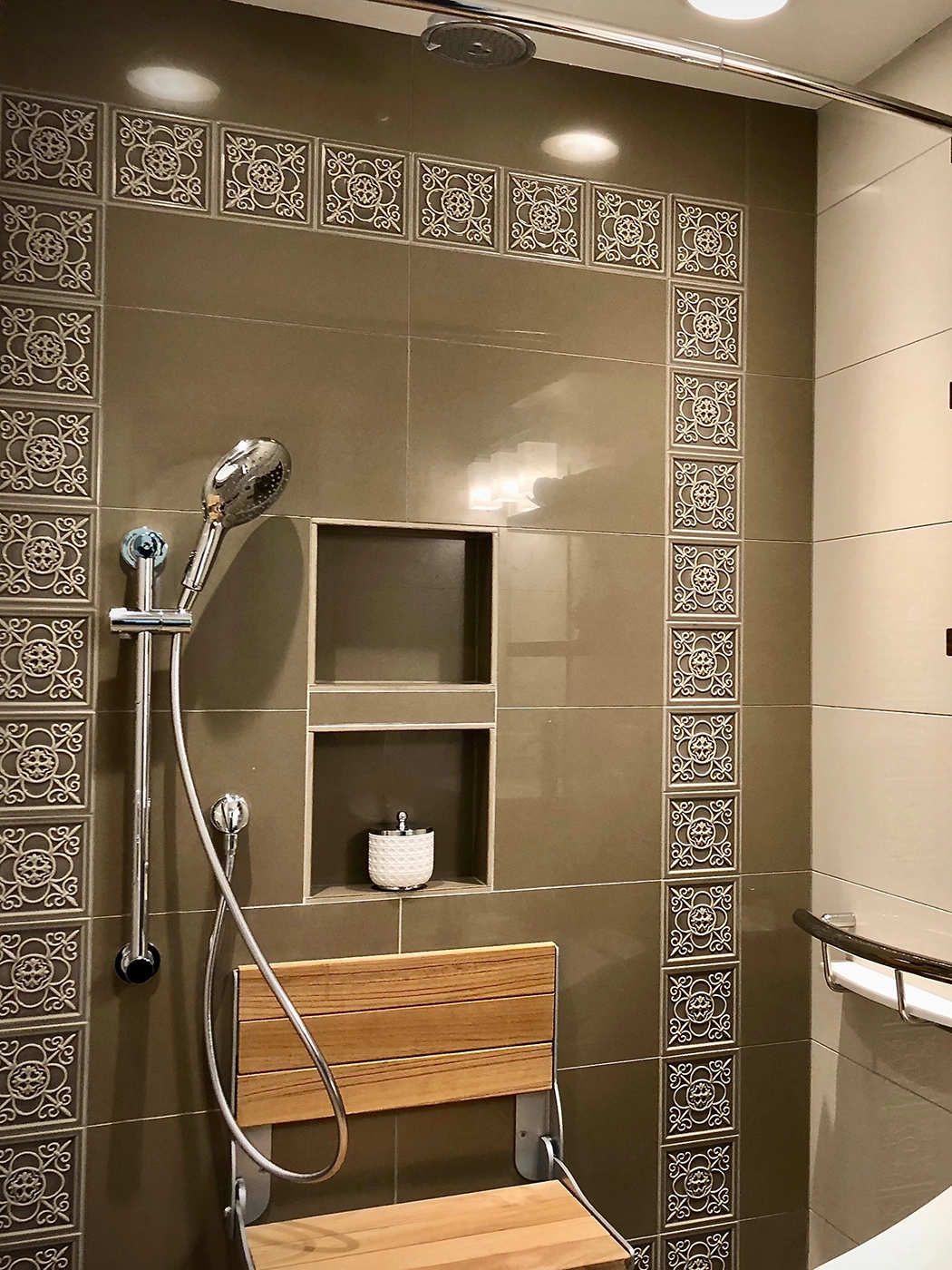
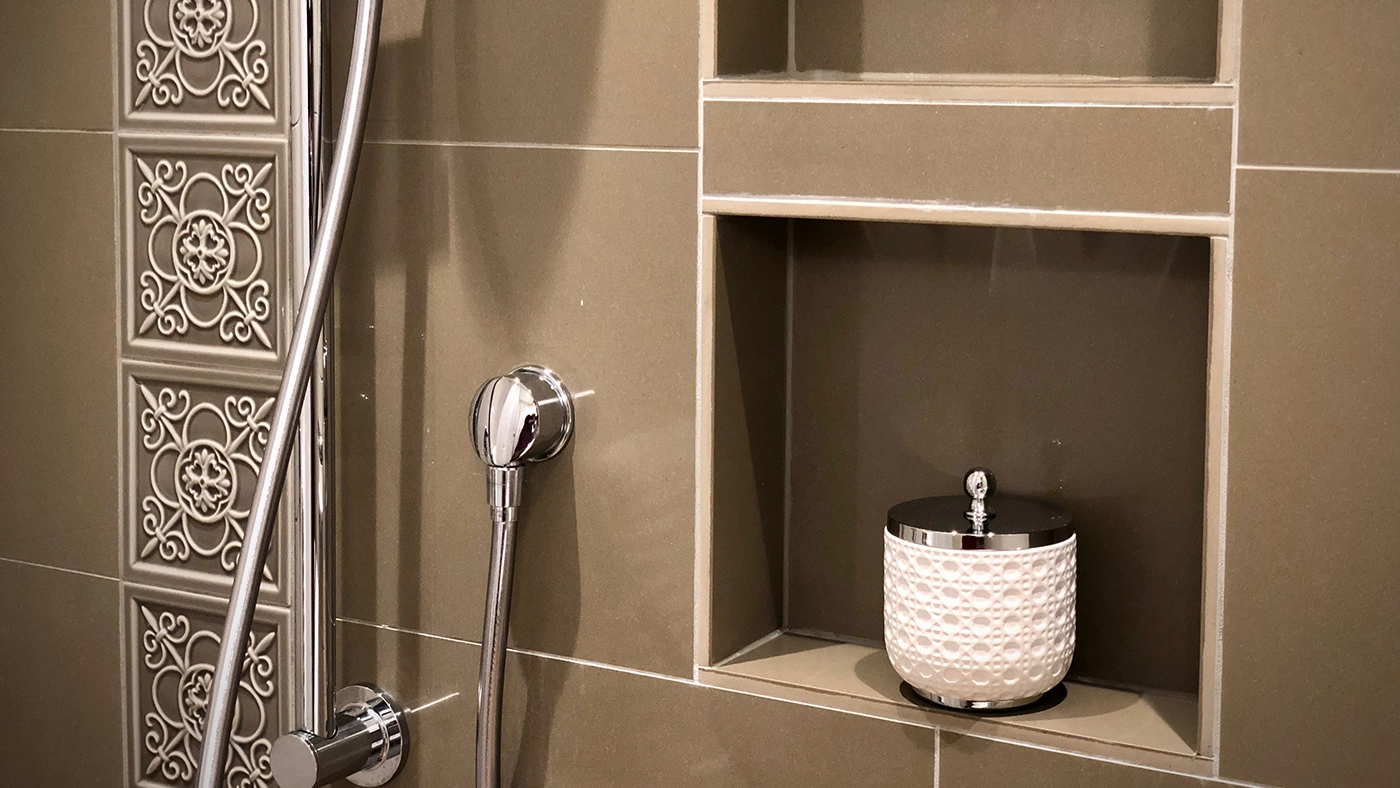
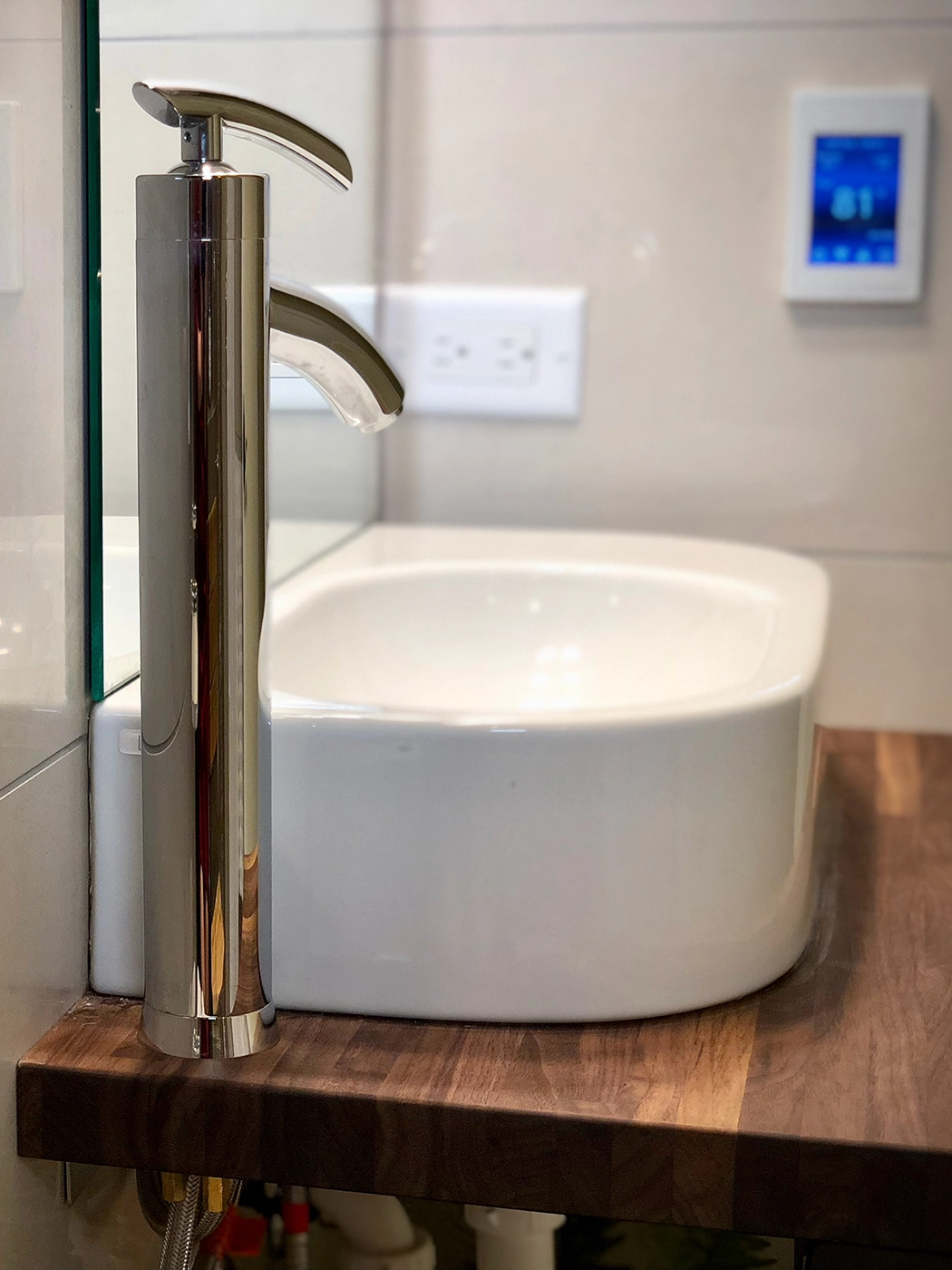
Designed for Universal Access
The scope was a full wet-room conversion: removing the tub entirely, sloping the floor to a central drain, widening the doorway to ADA clearance, and integrating grab bars as deliberate design elements rather than clinical add-ons.
The Mediterranean palette wasn’t decorative — it was the clients’ visual language. They had spent years travelling through Spain and Italy, and the project was as much about honoring that history as it was about accommodating the next phase of their life in this home.
Considering a Project?
The Work Begins With One Conversation
We hold a limited number of consultations each month and are selective about the projects we take on. If you’re ready to discuss yours, we’d like to hear about it.
Full wheelchair access, dual showerheads, and grab bars integrated into the tile pattern — Seattle, Washington.
The Challenge
Accessibility Without the Clinical
The existing bathroom was never designed for accessibility. Doorways were too narrow for a wheelchair. The layout centered around a traditional bathtub that created barriers to safe, independent movement. In a home approaching its centennial, every wall and threshold told a story — but none of them told a story of universal design.
Our job was to honor the architecture, accommodate the wheelchair, and refuse the institutional aesthetic that most accessible bathrooms default to.
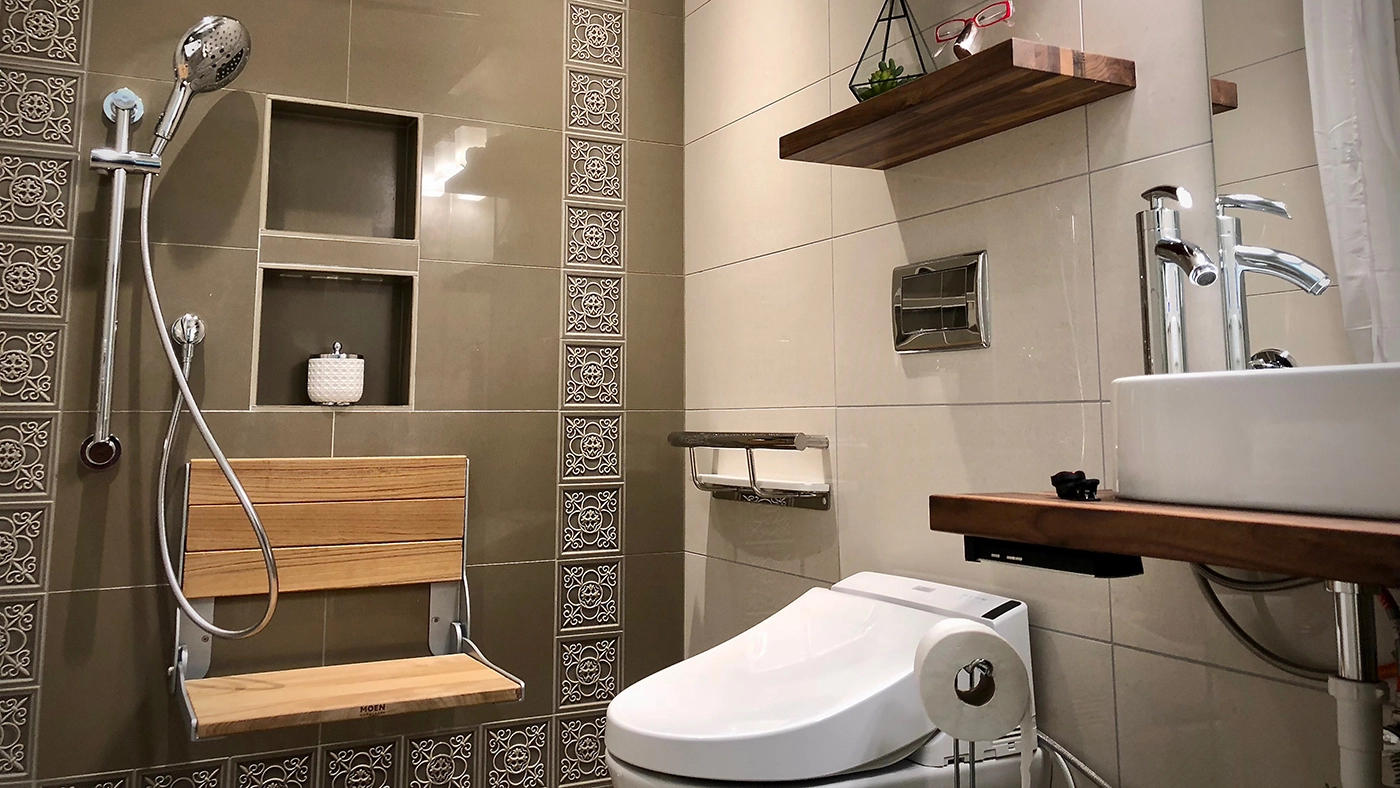

“Accessible design should never feel clinical. This project was about preserving dignity, independence, and beauty in the same space.”
Our Design Approach
Material Continuity, Mediterranean Inspired
We removed the bathtub entirely and converted the bathroom into a continuous wet area — barrier-free and wheelchair-accessible from entry to shower. The entire floor slopes to a central drain, allowing freedom of movement throughout the space.
Hand-painted ceramic tile with intricate patterns referenced the couple’s travels through Spain and Italy. Warm terracotta tones and wrought-iron-inspired hardware honored their Mediterranean aesthetic without becoming pastiche.
Grab bars were integrated into the tile pattern as decorative elements. The vanity was wall-mounted at accessible height with lever-handle fixtures. Every safety feature became a design feature.
Location
Seattle, Washington
Project Size
60 sq ft
Project Type
Aging-in-Place Renovation
Scope
Full wet-room conversion, ADA-compliant
Style
Mediterranean-inspired, hand-painted ceramic
Key Features
Curbless roll-in shower, widened doorways, integrated grab bars
Common Questions
Frequently Asked
Yes — that’s the entire premise of this project. Accessibility features like grab bars, curbless showers, and widened doorways can all be integrated as design elements rather than clinical add-ons. The result reads as a thoughtful bathroom that happens to be ADA-compliant, not an institutional space.
A wet room treats the entire bathroom as a single waterproofed zone. The floor slopes to a central drain, there’s no shower curb or enclosure, and water is free to fall anywhere. For aging-in-place clients, it’s the most accessible configuration possible — a wheelchair can roll directly into the shower without any threshold to navigate.
Yes. We’ve designed multiple ADA-compliant and aging-in-place bathrooms across the Greater Seattle area. We coordinate directly with general contractors, accessibility consultants, and occupational therapists when the project warrants it.
We map the existing architecture first — what stays, what shifts, what gets reconciled. The goal is always that the renovation reads as though it was always part of the home. In a century-old house, that means honoring the proportions, the millwork language, and the material vocabulary the home was originally built with.
Slip-resistant tile with a smaller format and tighter grout grid is non-negotiable for the floor — the texture provides traction and the grout adds slip resistance. For walls, we favor large-format tile or hand-painted ceramic that minimizes seams. All grout and substrates must be rated for continuous water exposure.