
A 1921 Building Taken Seriously
The bones are 100 years old. The brief was to make the rest of the building match them.
A building built in 1921 has earned something most interiors never achieve: real character. The wear is real, the proportions are from an era when buildings were designed to last, and the structural honesty is the kind that costs money to replicate when it’s gone. When MarketHQ commissioned this remodel, the instruction was clear: this cannot look like a startup office.
The challenge was modern function within historic form — acoustic privacy for video calls, zone definition for focused and collaborative work, and visual differentiation that lets people navigate without signage. None of that required moving the bones.


Designed Around What Can’t Move
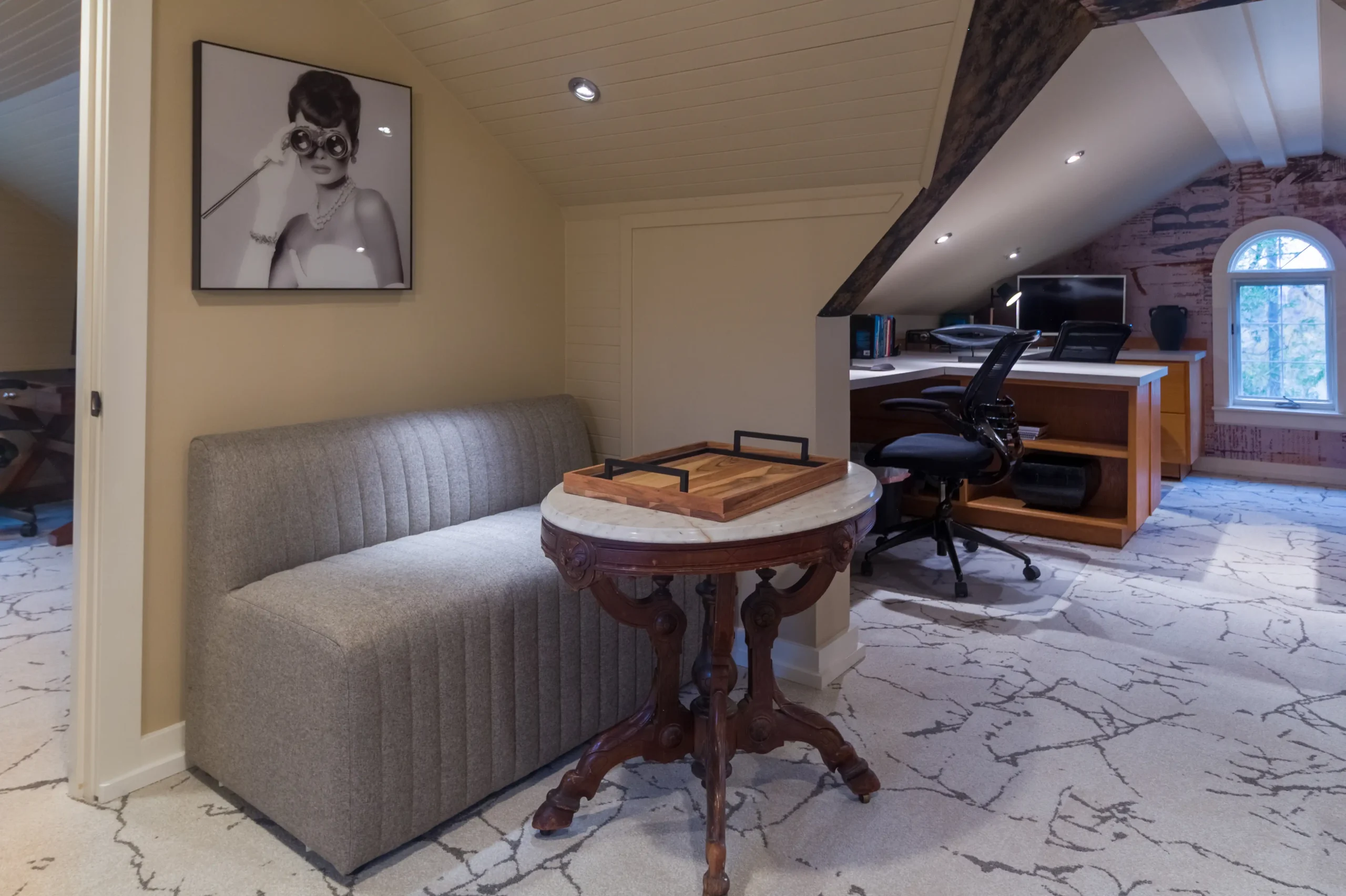
The original structural elements were non-negotiable — they define the building and they were not moving. That constraint became the design framework: everything new was chosen to work with exposed masonry, original windows, and proportions that don’t respond the way new construction does.
Wallpaper became the primary zone-definition tool. In a building where adding walls costs character, wallpaper patterns define areas visually without construction. Each zone reads differently. The transitions are deliberate.
The Work Begins With One Conversation
We hold a limited number of consultations each month and are selective about the projects we take on. If you’re ready to discuss yours, we’d like to hear about it.

The Challenge: Modern Function in a Historic Shell
Modern workplaces require specific things that 1921 buildings were not designed for: acoustic privacy for video calls, defined zones for focused and collaborative work, enough visual differentiation that people can orient themselves. In a building where you can’t move walls without losing what made the building worth keeping, these are design problems.
The existing palette was original masonry and aging plaster — surfaces that absorb sound unevenly and read as cold under artificial light. The intervention had to solve acoustic and visual problems simultaneously, with materials that could hold against 100-year-old bones without looking placed.


“The building’s history is still present. We just gave it somewhere to go.”

How We Solved the Acoustic Problem
Zoom rooms were built into corners where the structural grid allowed enclosure. Acoustic treatment was installed behind finished walls. From outside, the rooms read as part of the original building’s rhythm. Inside, they function fully for video calls.
Carpet insets define the meeting and lounge zones. On a historic building floor, hard surface throughout creates echo and noise that’s uncomfortable for the number of hours people actually spend in an office. Carpet in specific zones solves the acoustic problem and creates visual differentiation that tells people what each area is for — without signage.
Original structural elements were cleaned and detailed, not concealed. The 1921 bones are the design. The new materials were chosen to exist alongside them rather than replace them.


Frequently Asked
The work in this portfolio is the standard we hold ourselves to on every project — not just the celebrated ones. We take on a limited number of engagements each year, which means the projects we commit to receive our full attention from the first conversation through the final installation. If you're considering a renovation, a new build, or a full redesign, tell us about your home. We'll tell you honestly whether we're the right fit — and what working together would look like.
Your home should stop you. Every time you walk in.