Portfolio · Lake Oswego, Washington
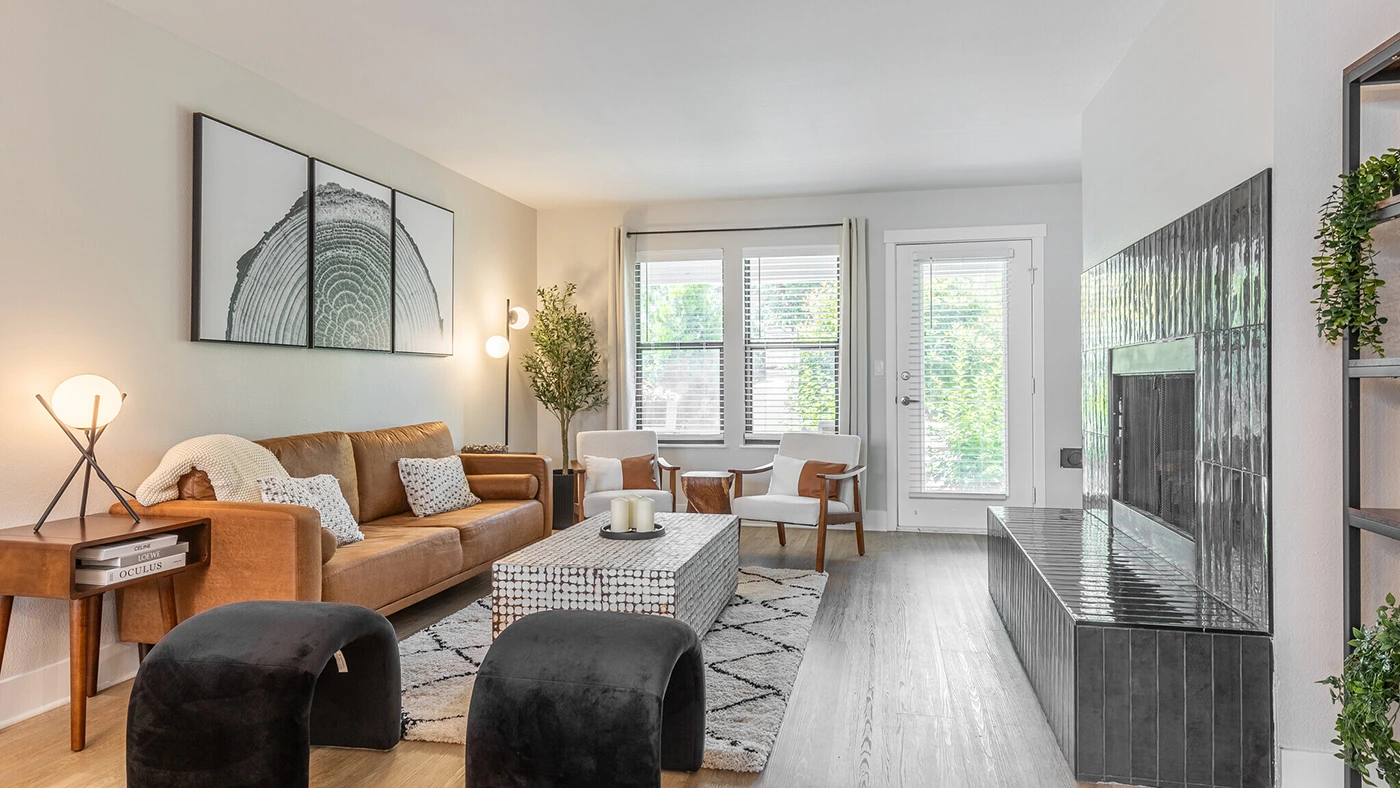
The Show Room: One Jefferson Model Living Room
A 1,176-square-foot model unit designed to sell — seven distinct zones, one cohesive vision.
Model units have one job: make people want to live there. For One Jefferson in Lake Oswego, that meant designing seven distinct spaces — living, dining, kitchen, primary bedroom, secondary bedroom, bathroom, and a balcony-adjacent lounge — so that every square foot felt considered rather than generic.
The challenge was breadth. A single project had to work as a luxury apartment sales tool while also functioning as a believable home. That required materials and furnishings that read as elevated without feeling staged — the difference between a showroom and a show room.
Designed to Close the Deal
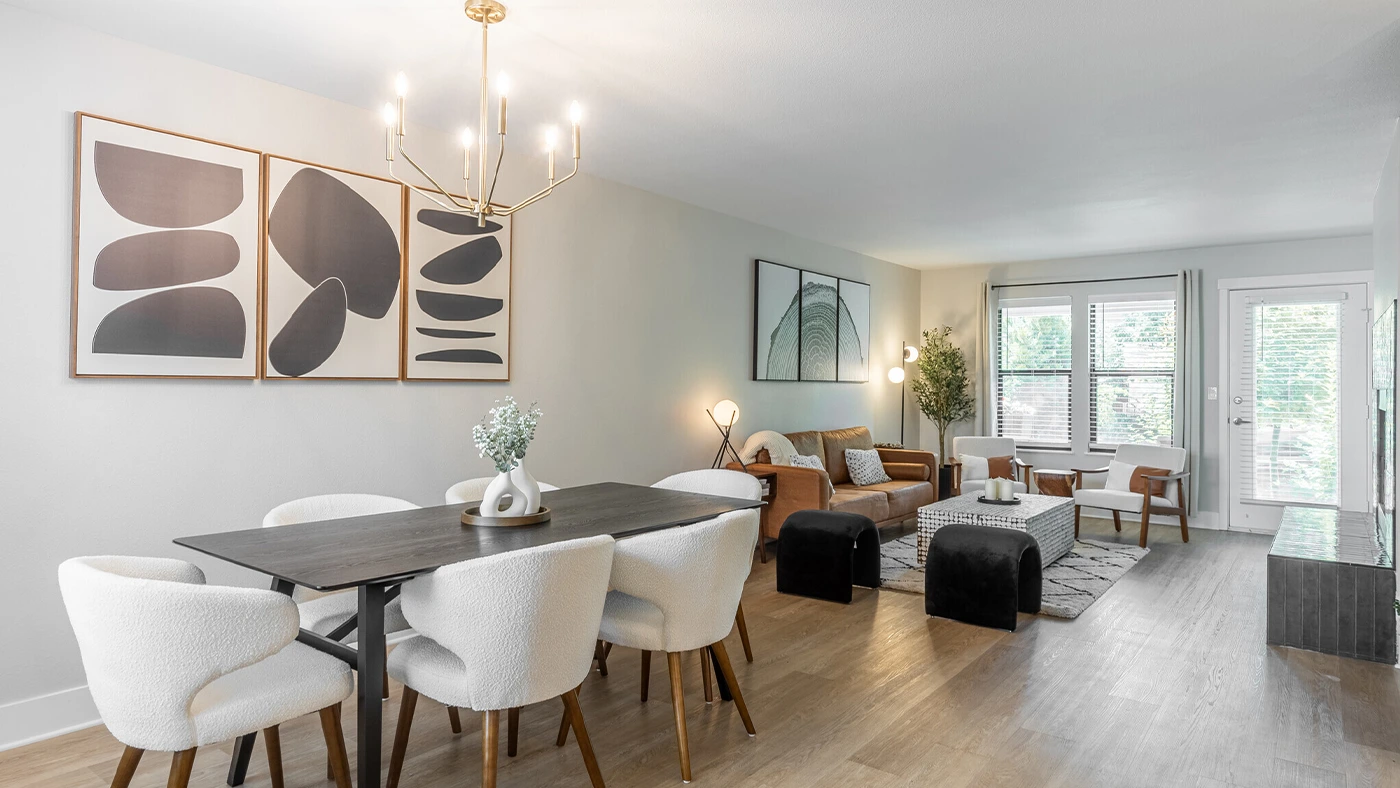
Model unit work sits at the intersection of interior design and sales strategy. Every material choice, every furniture placement, every lighting decision is in service of a prospective resident’s first walk-through. The leather sofa anchors the living room with weight and durability. The boucle chairs add texture and warmth without competing. The tiled coffee table grounds the space with a material that signals quality.
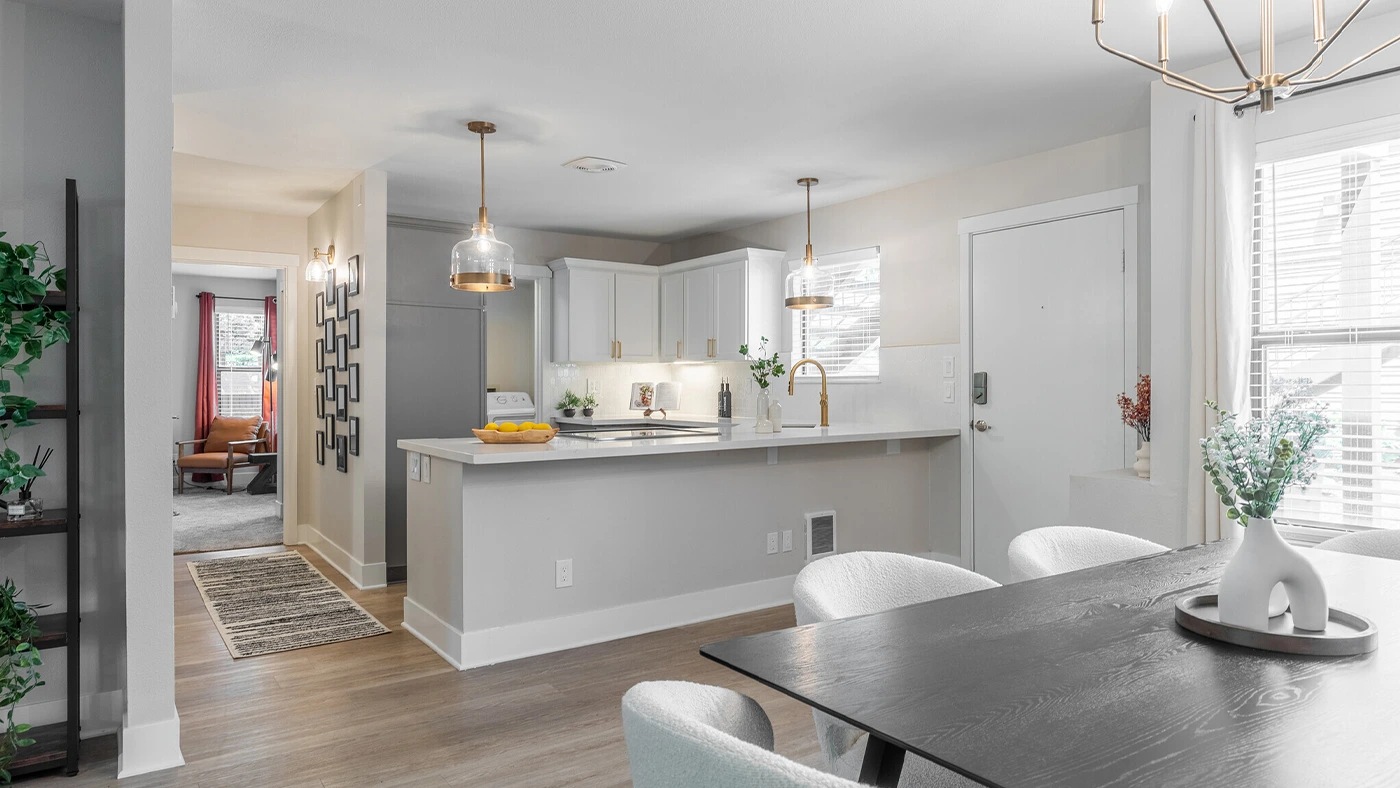
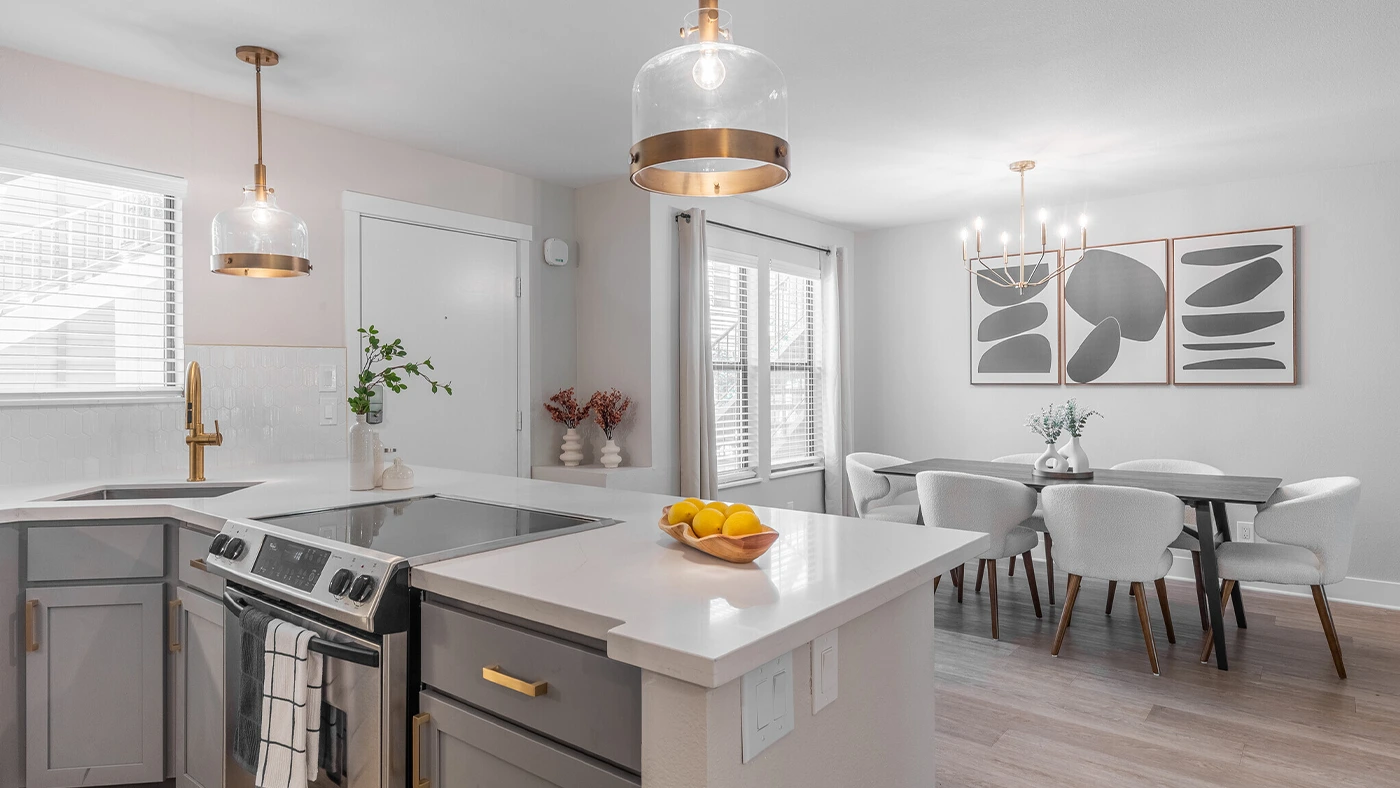
In the dining area, a dark wood table and brushed gold chandelier set the tone: this is a building that takes craft seriously. The kitchen — open-concept, with clean white cabinetry and integrated appliances — was designed to read well both in person and in the listing photography.
Considering a Project?
The Work Begins With One Conversation
We hold a limited number of consultations each month and are selective about the projects we take on. If you’re ready to discuss yours, we’d like to hear about it.
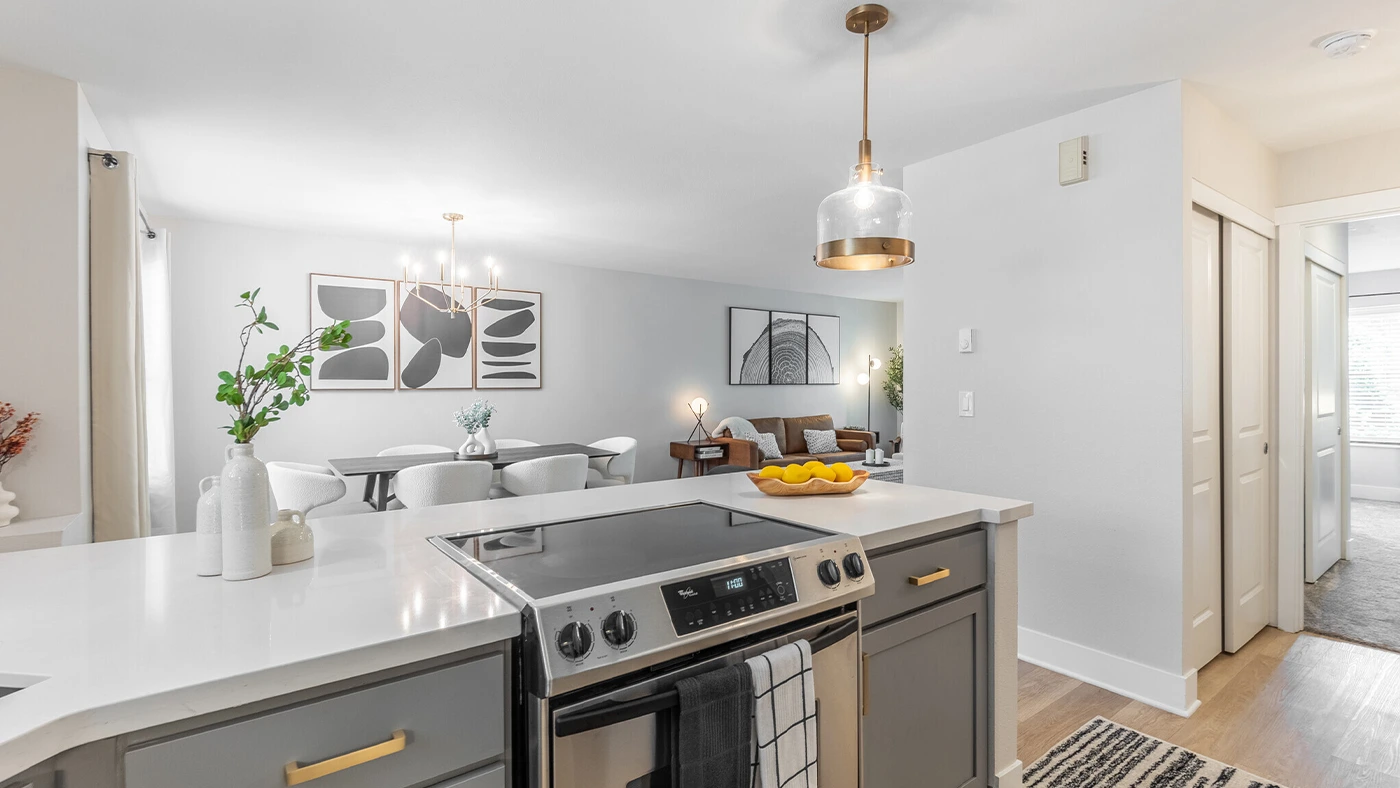
Open-concept kitchen with integrated appliances and clean sightlines through to the living area.
The Challenge
Seven Zones, One Throughline
Multi-room projects live or die by the transitions. When a prospective resident moves from the living room to the primary bedroom to the second bedroom, the palette and material language have to read as intentional — not like three different designers worked on three different rooms.
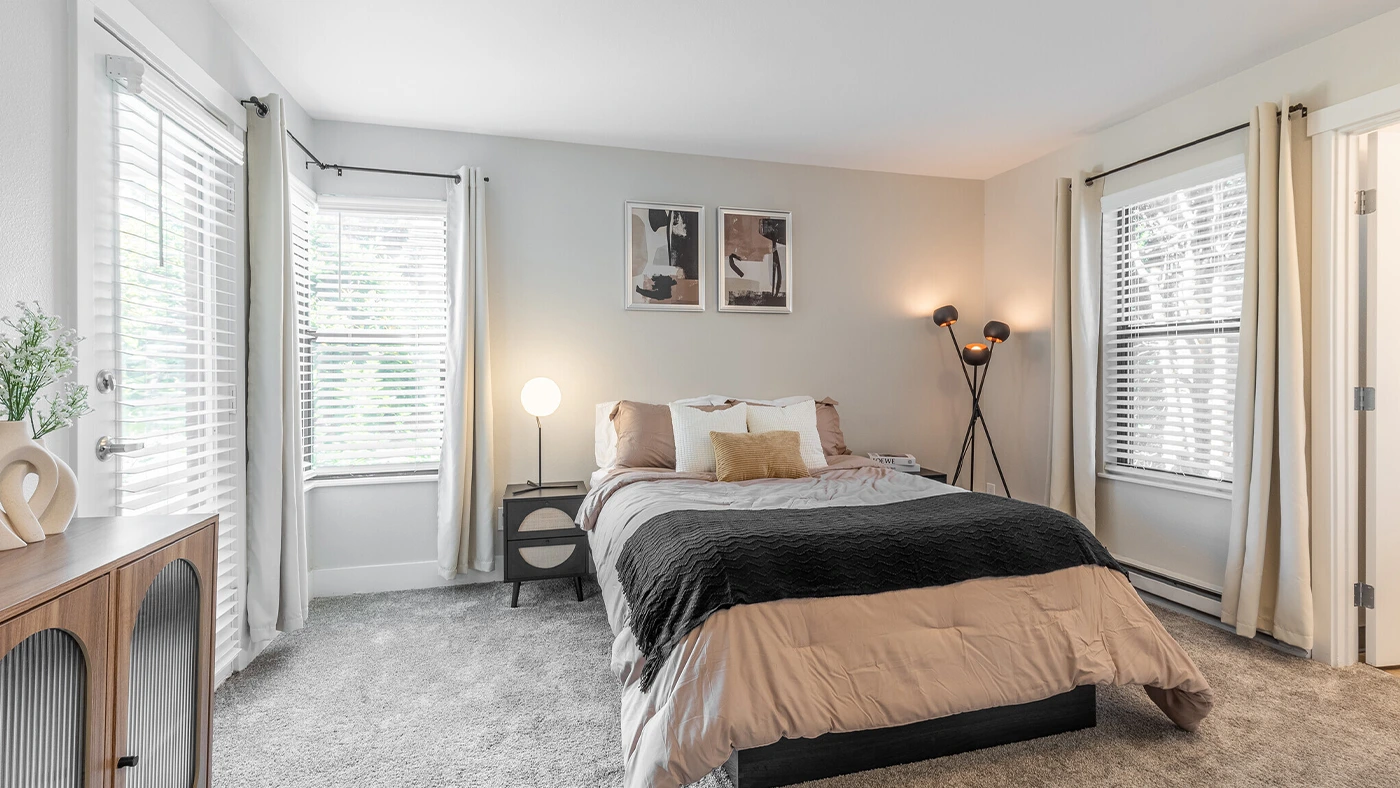
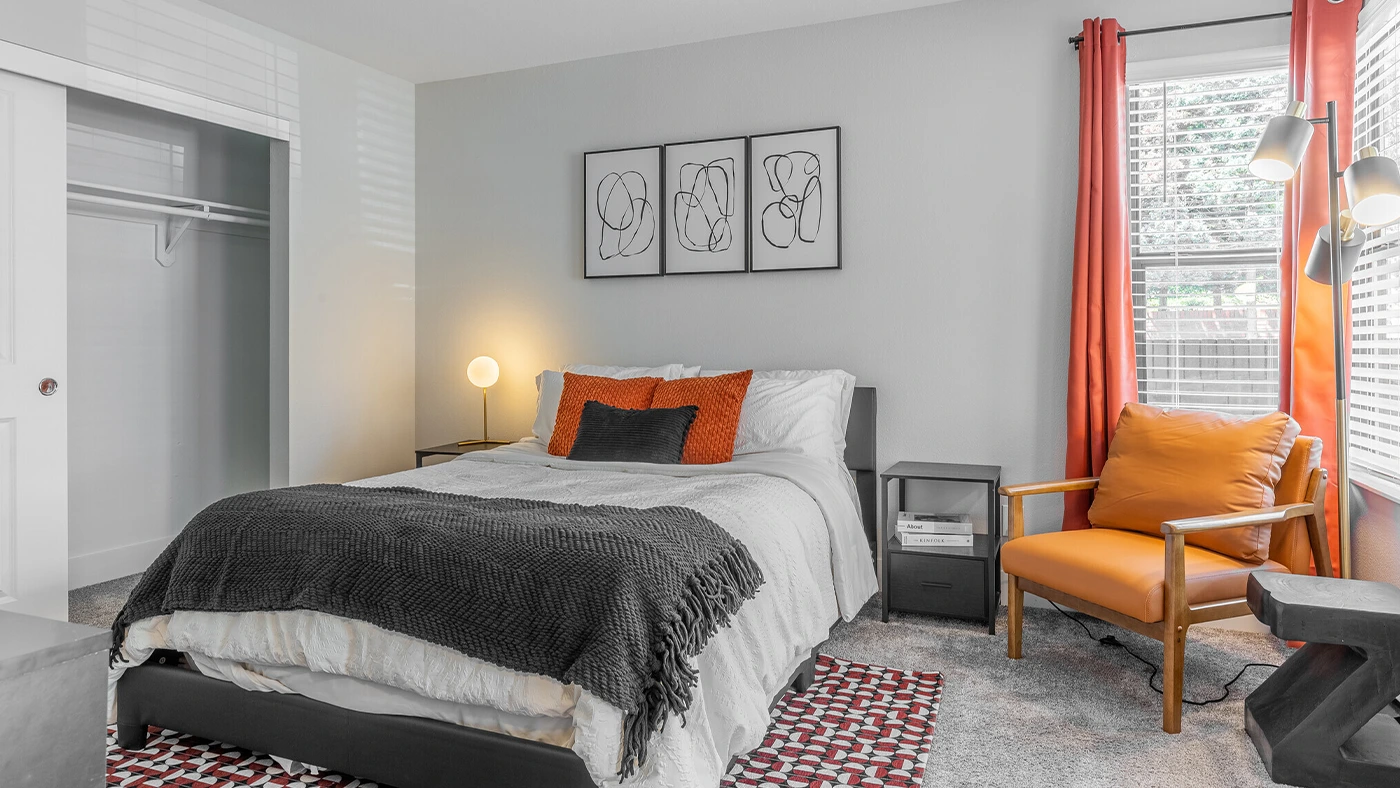
The scope here covered every room in the unit: living room with leather and boucle seating, dining with statement lighting, kitchen with open sightlines, primary bedroom in neutral grays, secondary bedroom with orange accent tones, a full bathroom, and the entryway into each. Maintaining cohesion across that range without making every room feel identical was the central design problem.

“A model unit isn’t decoration — it’s an argument for a way of living.”
Our Design Approach
How We Approached It
The palette was anchored first. A warm neutral base — creams, taupes, natural wood tones — ran through every room, with accent decisions made room by room. The primary bedroom stayed cool and quiet; the secondary bedroom got the orange to give it a distinct identity without breaking the thread.
Furniture selection prioritized scale and legibility. In a model unit, pieces that are too small read as cheap; pieces that are too large make the space feel tight. Every item was sized for the room and for how it photographs — important when the unit’s photography would drive leasing inquiries.
The kitchen and dining areas were treated as a single visual zone even though they serve different functions. Keeping the sight lines clear and the material palette consistent between them made the open floor plan feel intentional rather than simply open.
Project Size
1,176 sq ft
Location
Lake Oswego, Washington
Project Type
Model Unit Interior Design
Style
Modern Residential
Zones
Living, dining, kitchen, primary bedroom, secondary bedroom, bathroom
Scope
Full multi-room furnishing and design
Common Questions
Frequently Asked
It covers the full interior: furniture selection and placement, lighting, textiles, decorative accessories, and art. The goal is a space that photographs well, shows well in person, and communicates the building’s quality and target lifestyle to prospective residents.
In a private residence, the design serves one client’s life. In a model unit, it serves a sales process. That means every decision is evaluated for how it reads to a first-time visitor in a two-minute walk-through — not just how it functions over years of daily use.
Yes, and this is worth planning for from the start. We select pieces that are available for purchase so the developer has the option to include them in the sale or lease, which adds value and simplifies the transition from model to occupied unit.
A multi-room model unit like One Jefferson typically takes 6 to 10 weeks from initial concept to installation, depending on furniture lead times and site access. Rush timelines are possible but affect product availability.
Yes. Multi-unit and multi-building engagements are common, and there are efficiencies in treating a building’s model unit program as a single project — shared palette decisions, consolidated purchasing, and consistent brand expression across units.
The work in this portfolio is the standard we hold ourselves to on every project — not just the celebrated ones. We take on a limited number of engagements each year, which means the projects we commit to receive our full attention from the first conversation through the final installation. If you're considering a renovation, a new build, or a full redesign, tell us about your home. We'll tell you honestly whether we're the right fit — and what working together would look like.
Begin Your Project
Your home should stop you. Every time you walk in.