Portfolio · Sumner, Washington
Sumner, Fully Considered
Small space design is harder than large space design — every piece has to earn its place twice.
The Sumner apartment brief was tight in every sense: 650 square feet, one primary living zone, and a client who wanted the space to feel curated rather than compact. No compromise furniture, no visual clutter, nothing that didn’t belong. The result had to live like a larger space while operating within its actual footprint.
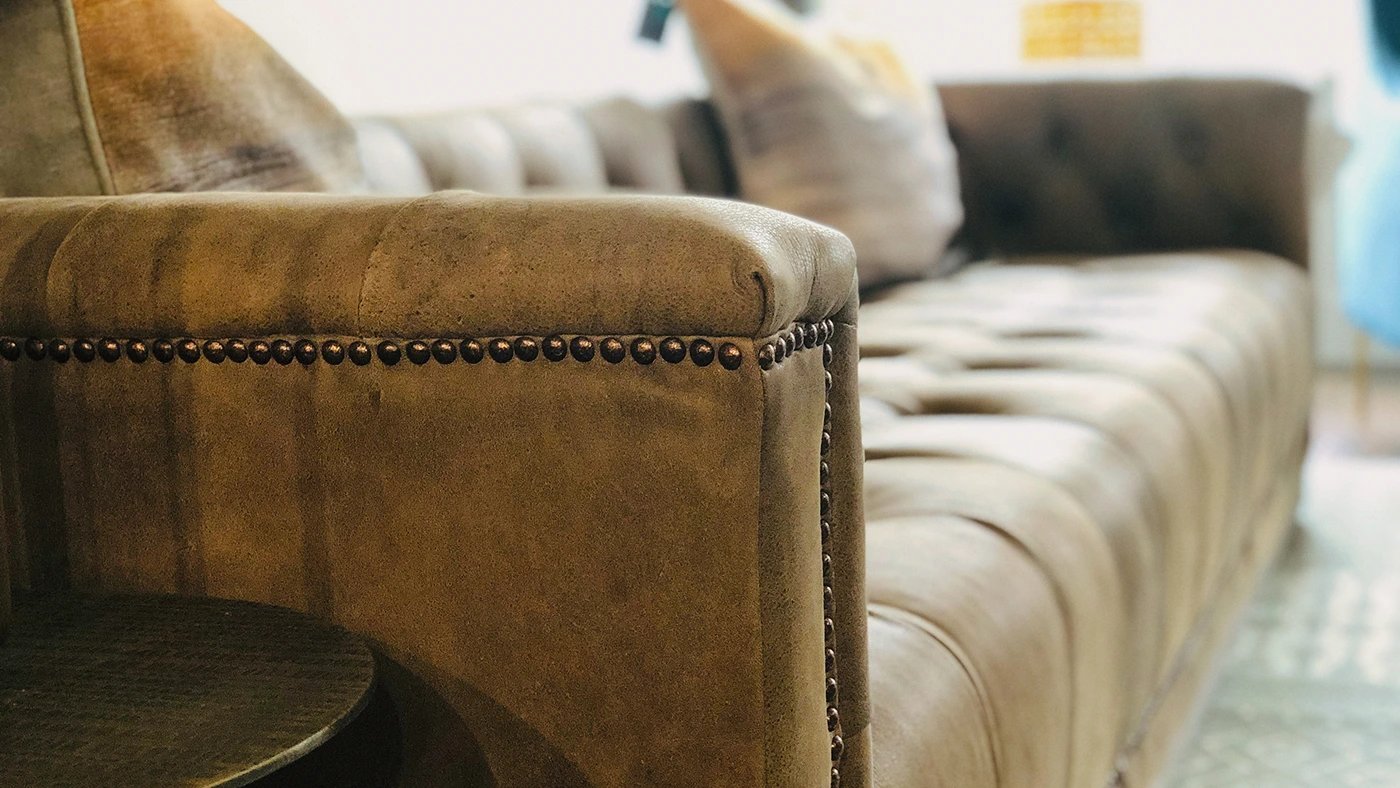
The approach: select fewer pieces, select them better. A tufted leather sofa with presence. Blue armchairs that hold the corner without shrinking it. A geometric rug that anchors the zone without overwhelming it. Two chandeliers selected for their contribution to both light and atmosphere. Every piece pulls weight.


Designed for Maximum Presence
In a small apartment, furniture scale is counterintuitive. The instinct is to go small — compact pieces, less visual mass. But undersized furniture in a compact space reads as cheap and tentative. The correct move is to select fewer pieces with genuine presence — pieces that anchor the room rather than apologize for being in it.
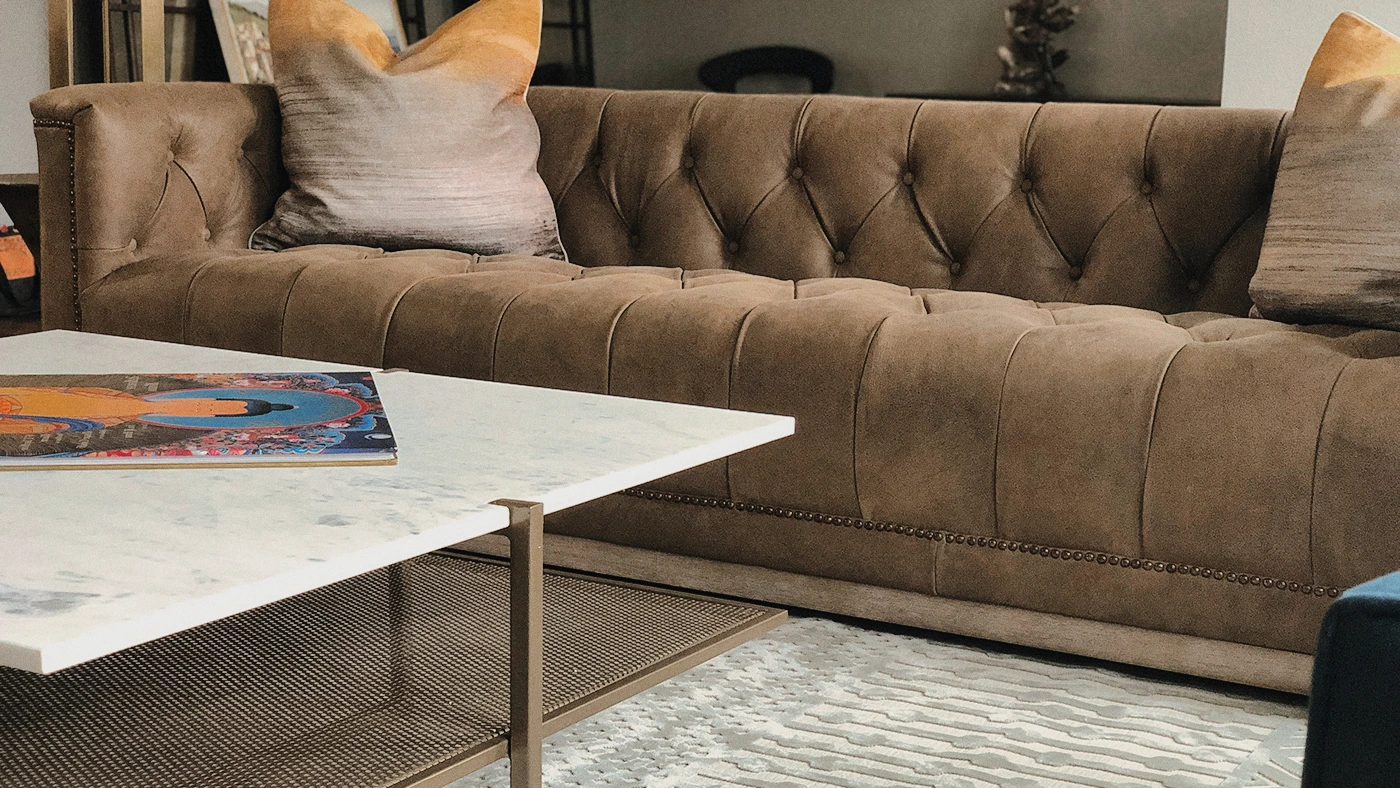
The tufted leather sofa is the room’s primary statement. Its scale is deliberate: it fills the living zone appropriately, creates a defined seating area, and contributes visual weight that grounds the space. The armchairs in blue hold the opposite corner — their color is the room’s one strong move, held in check by the neutral palette everywhere else.
Considering a Project?
The Work Begins With One Conversation
We hold a limited number of consultations each month and are selective about the projects we take on. If you’re ready to discuss yours, we’d like to hear about it.
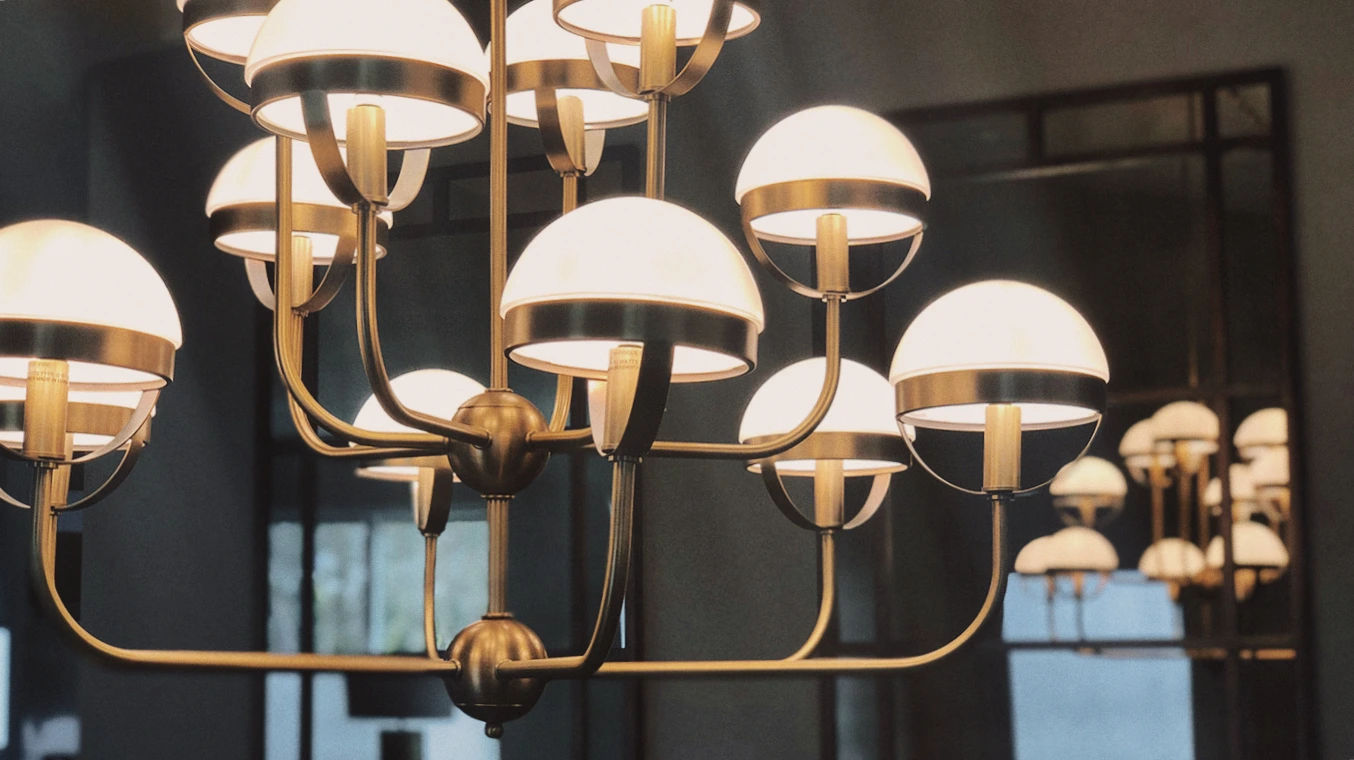
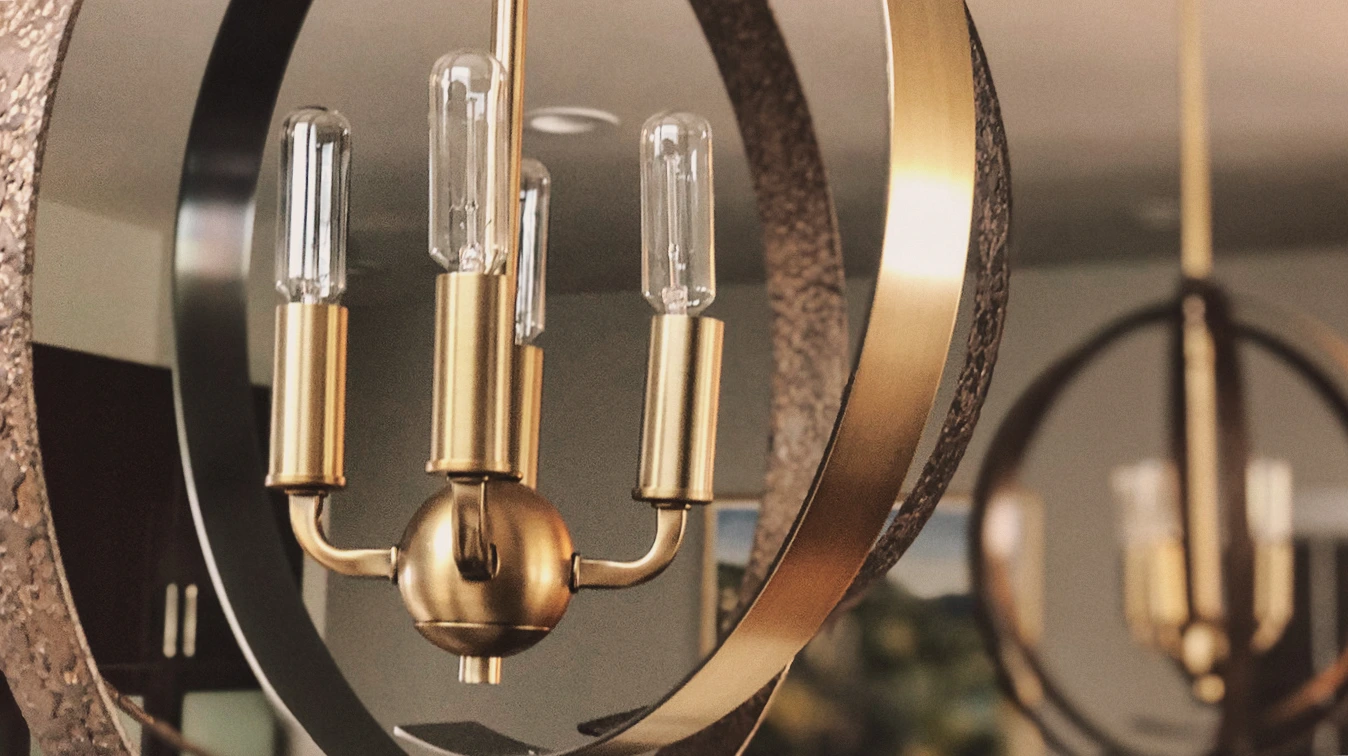
Lighting chosen as much for its sculptural contribution as its lumens.
The Challenge
The Challenge: Editing Without Losing
The hardest part of small space design isn’t what you add — it’s what you leave out. Every piece that doesn’t earn its place creates visual noise that makes the space feel smaller. The editing process is where the design actually happens: ruthless about inclusion, generous with quality.
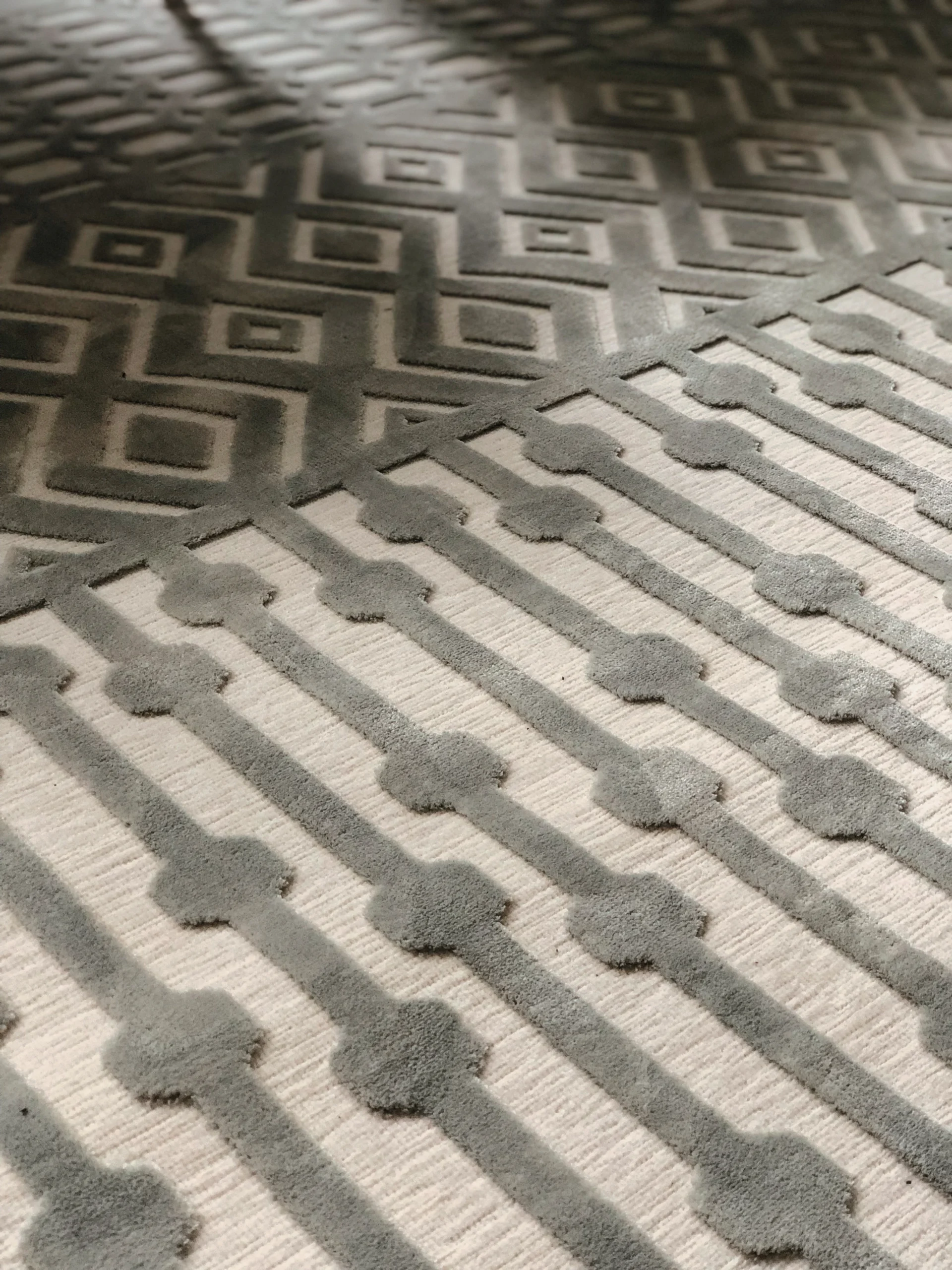
Pattern introduces risk in a compact space. The geometric rug was selected for its scale — large-pattern, not small-repeat — because large-scale pattern in a small room expands rather than contracts the visual field. The same principle applies to the chandelier selections: sculptural objects at ceiling height draw the eye upward and effectively add perceived volume.
“In a small space, every piece is either carrying the room or costing it — there’s no neutral.”
Our Design Approach
How We Curated the Space
Selection started with the sofa — the room’s functional and visual anchor. Once the scale, material, and tone of the sofa were confirmed, everything else was built in relation to it. The armchairs for color contrast. The coffee table for proportion. The rug for zone definition.
Lighting was spec’d in two registers: ambient and sculptural. The illuminated glass chandelier provides even ambient light while contributing visual interest at ceiling level. The gold Edison chandelier adds warmth and a vintage-modern contrast that keeps the room from reading as too uniform.
The wooden chair at the dining position bridges the gap between the living zone and the kitchen entry — a transitional piece that serves both zones spatially while contributing its own material note (natural wood against the upholstered pieces in the main living area).
Location
Sumner, Washington
Project Size
650 square feet
Project Type
Apartment Interior Design
Style
Modern with eclectic material mix
Key Features
Curated furniture selection, layered lighting, geometric textiles
Scope
Full apartment interior design
Common Questions
Frequently Asked
Fewer pieces, better pieces. Furniture that’s correctly scaled — not undersized — to the room. Large-pattern textiles that expand the visual field rather than segment it. Lighting at ceiling height that draws the eye upward. Negative space left intentionally, not from lack of budget. The goal is a room that reads as edited, not empty.
Pieces with presence and clear function. A sofa scaled correctly to the zone — not a love seat that apologizes for the space, but a full sofa that anchors it. Chairs with a defined material or color identity. A coffee table with enough mass to hold the group. Avoid furniture that doubles as storage unless it does both well — hybrid pieces usually do neither optimally.
Go larger than you think. A rug that’s too small floats in the center of the room and makes the space feel divided and uncertain. The rug should anchor all four legs of the seating group, or at minimum the front legs. Pattern scale: large-repeat patterns visually expand; small-repeat patterns visually contract. When in doubt, size up.
At minimum three sources per zone: ambient (overhead, even base light), task (functional light where you need it — reading, kitchen prep), and accent (decorative, sculptural, or directed at an object). In a small apartment, the overhead fixture pulls double duty as ambient and sculptural. Choose it accordingly — it’s the most visible piece of light in the room.
Yes, strategically. One color, one zone, held in check by neutrals everywhere else. The blue armchairs in this project work because everything around them is neutral — the sofa, the rug ground tones, the walls. The color creates a focal point without becoming a problem. Spread the same color across multiple surfaces in a small room and it tips from accent to enclosure.
The work in this portfolio is the standard we hold ourselves to on every project — not just the celebrated ones.
Begin Your Project
Your home should stop you. Every time you walk in.