
Portfolio · Bellevue, Washington
Counter to Cabinet, Vuecrest
A full kitchen transformation — from layout to cabinet detail — designed to function as the home’s center of gravity.
The Vuecrest interior brief started in the kitchen and expanded outward. The client wanted a custom kitchen that would serve as the home’s primary social and functional hub — not a renovated kitchen, but a designed one. Every decision made deliberately, from the island proportions to the cabinet profile to the lighting at each zone.
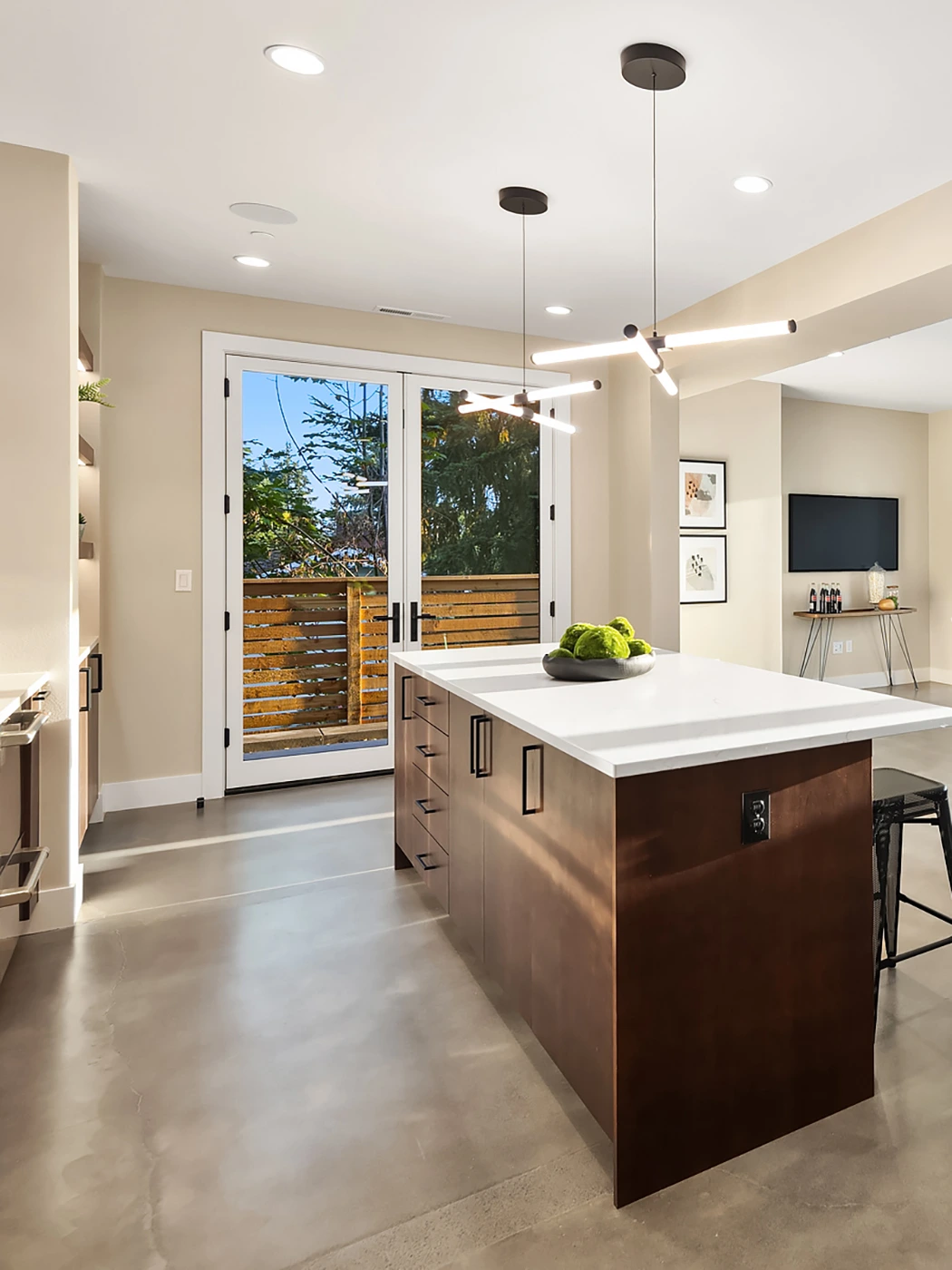
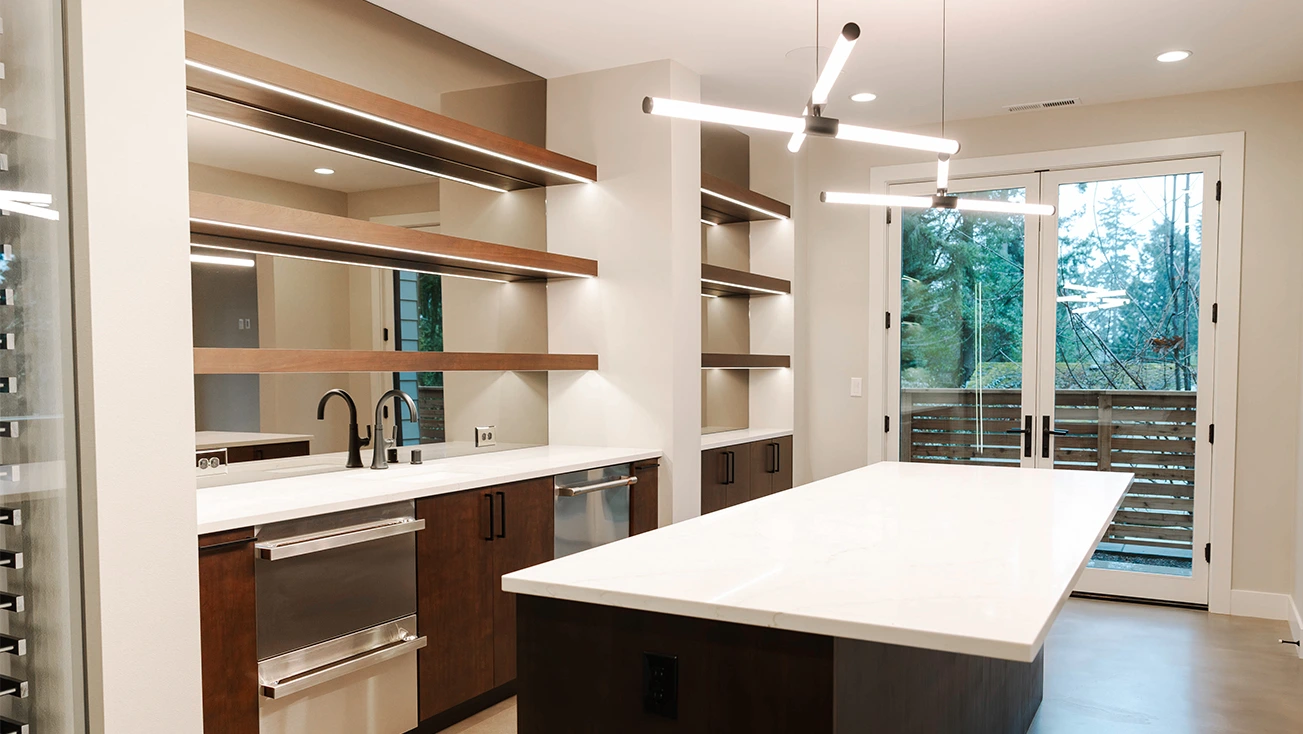
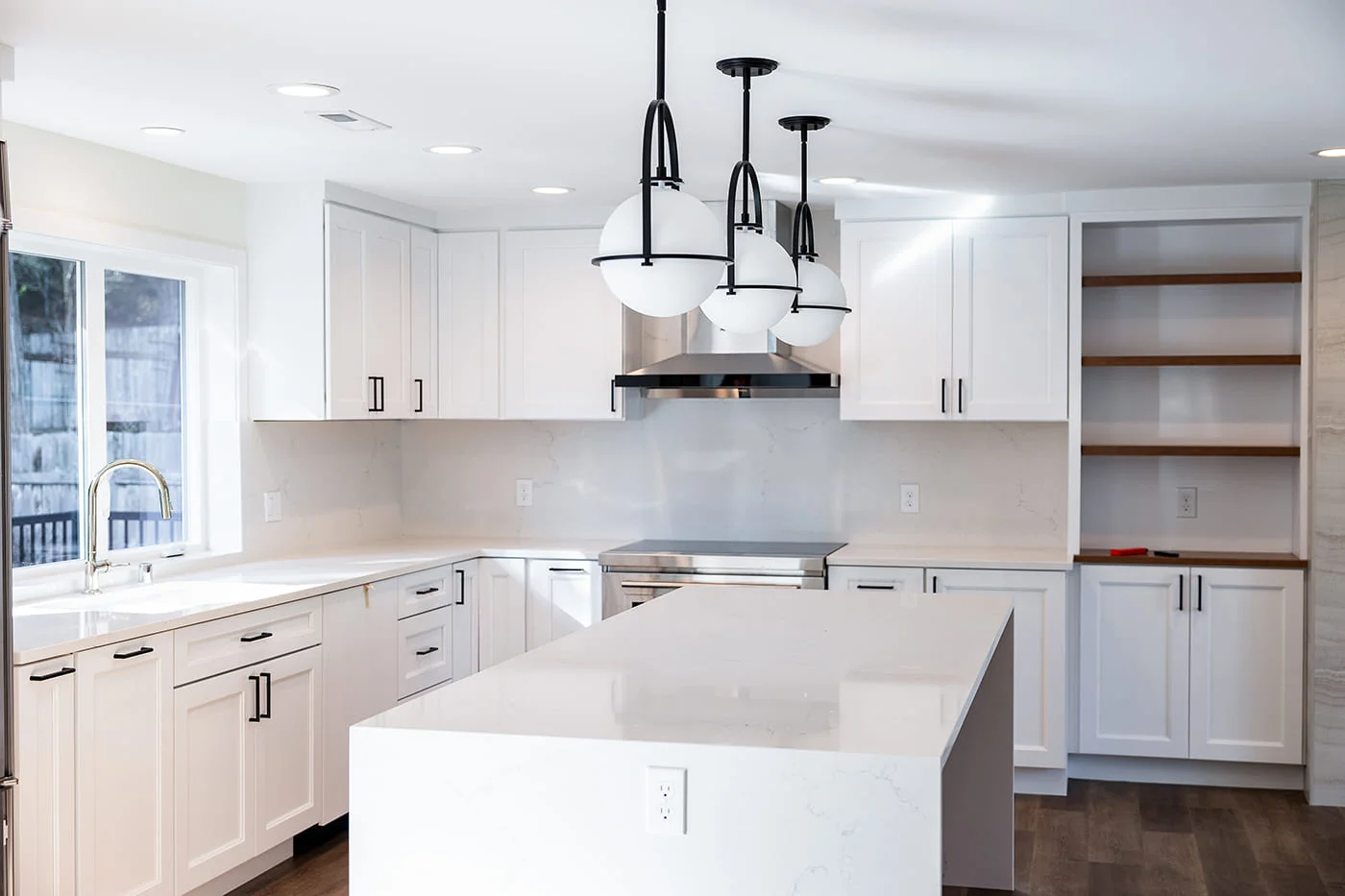
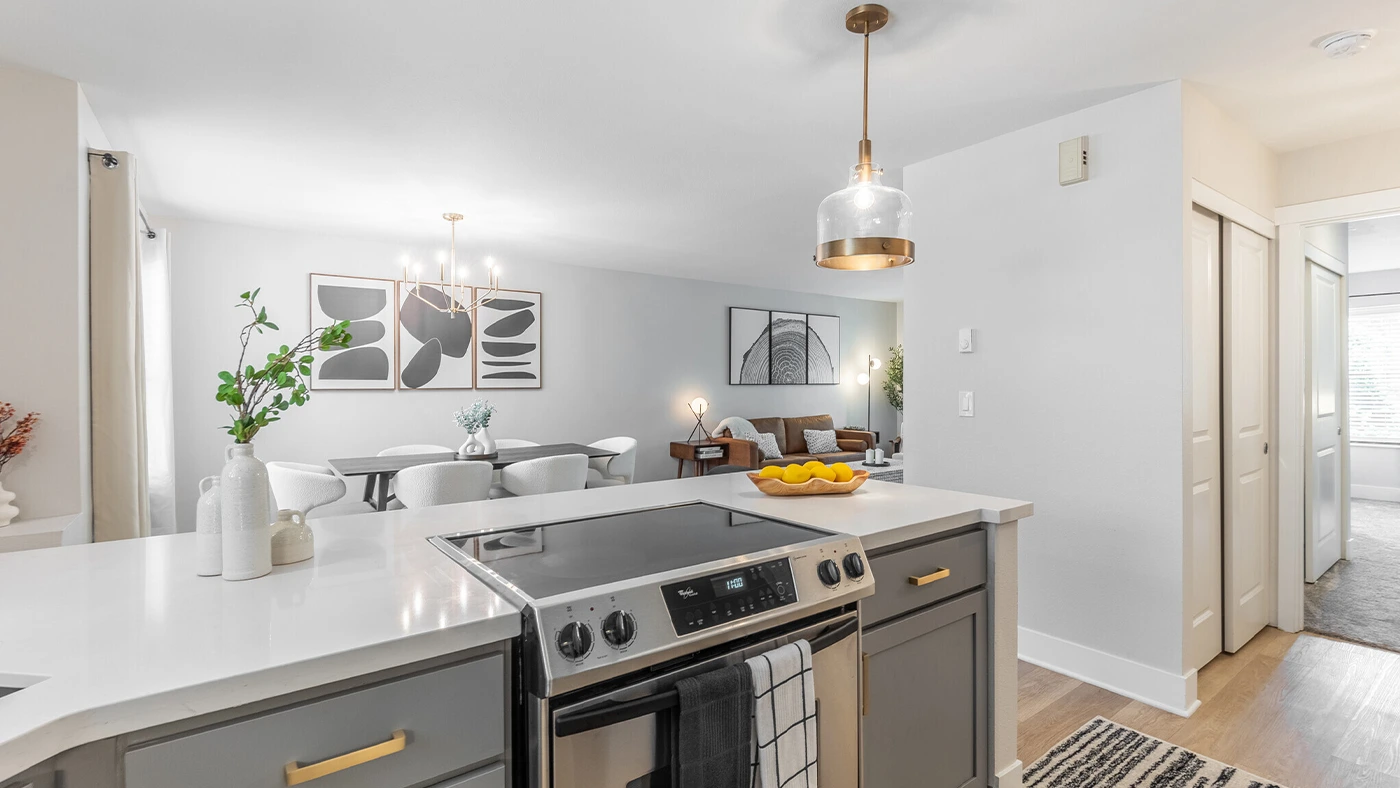
The result is a kitchen that earns its square footage. White cabinetry with precise hardware. A white stone island scaled to the open floor plan. Pendant lighting placed for both task and atmosphere. The kitchen opens to the living area — the two zones operate as one.
Designed From the Inside Out
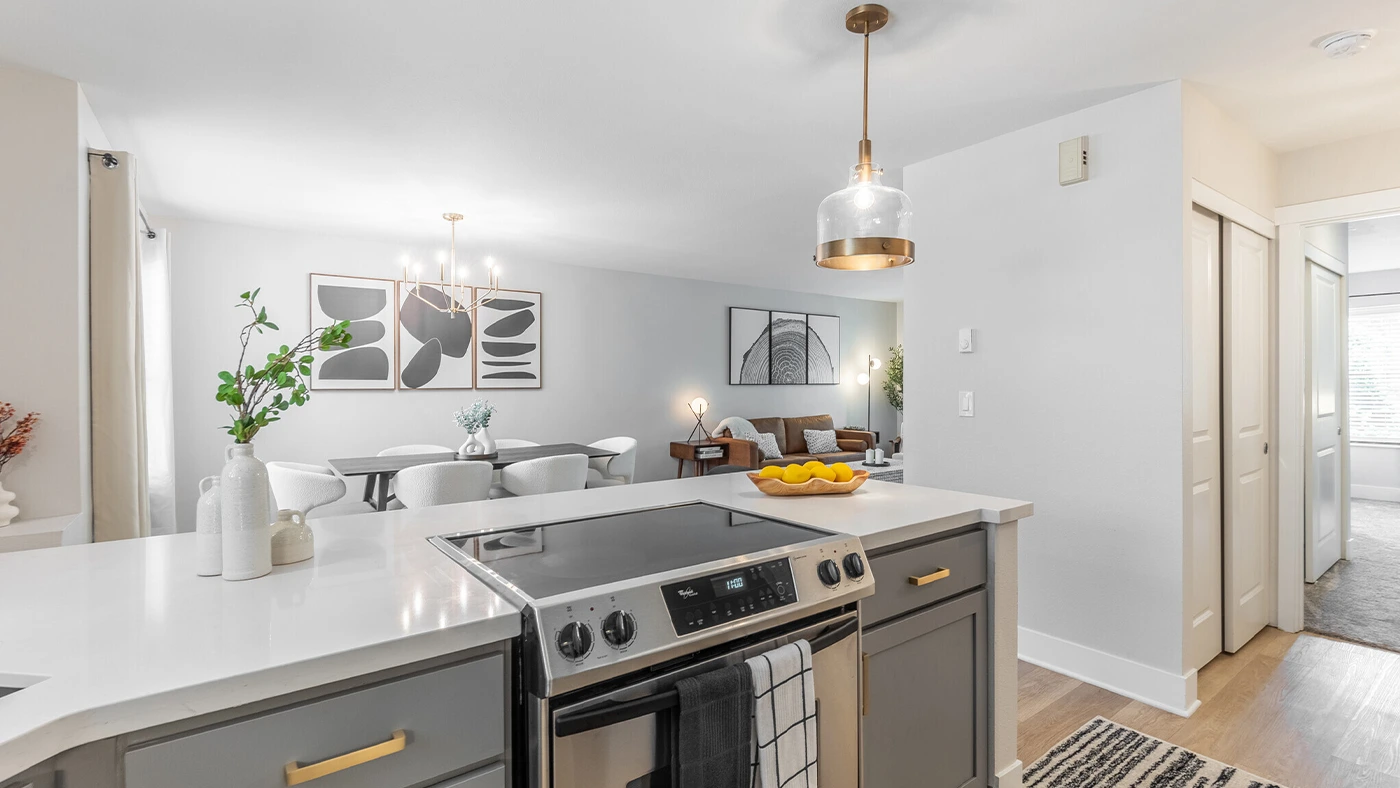
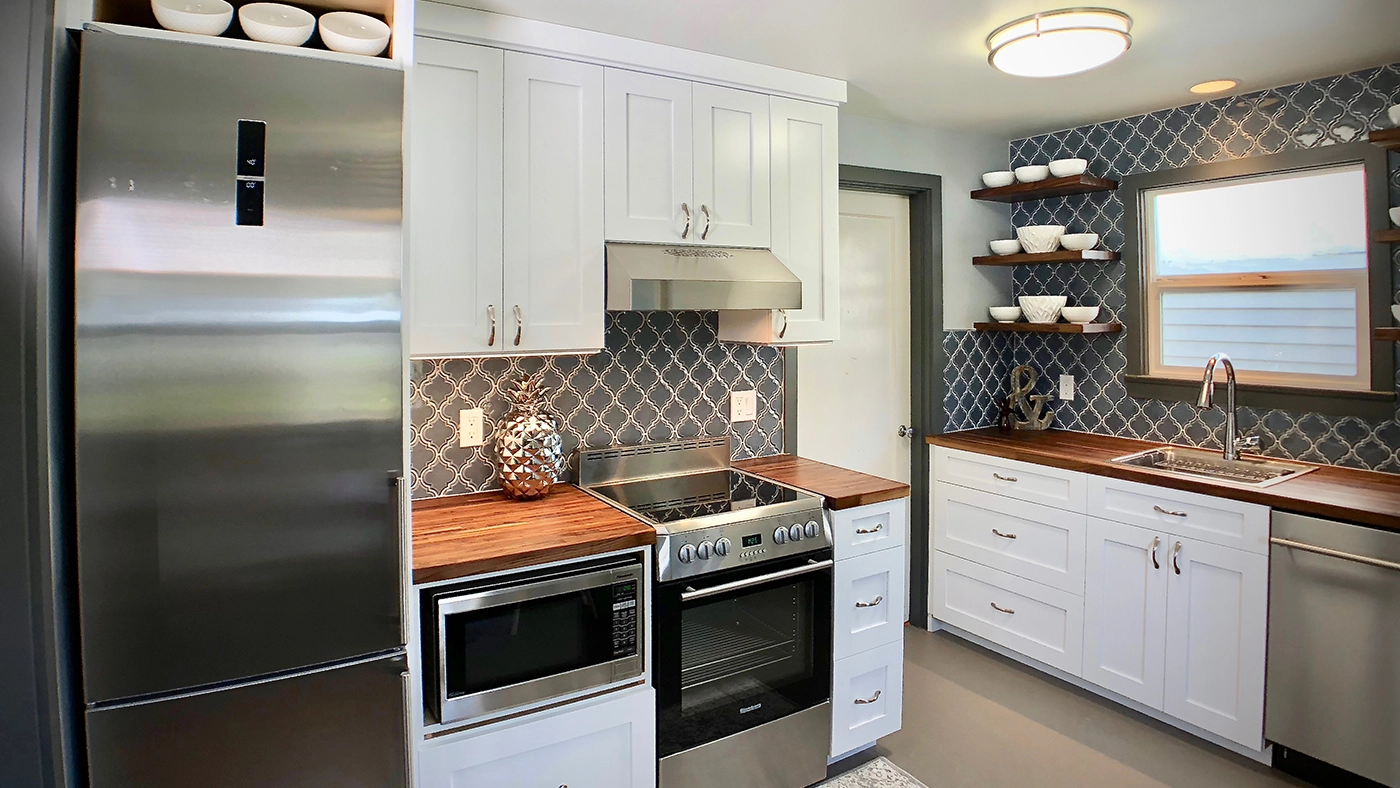
Cabinet selection was the design anchor. The profile — flat-front, full-overlay — sets the tone for the entire space. Hardware in a single consistent finish (brushed nickel throughout) keeps the reading clean. Upper cabinets were taken to ceiling height; the extra storage is useful and the visual effect — no soffit, no dead zone — reads as intentional.
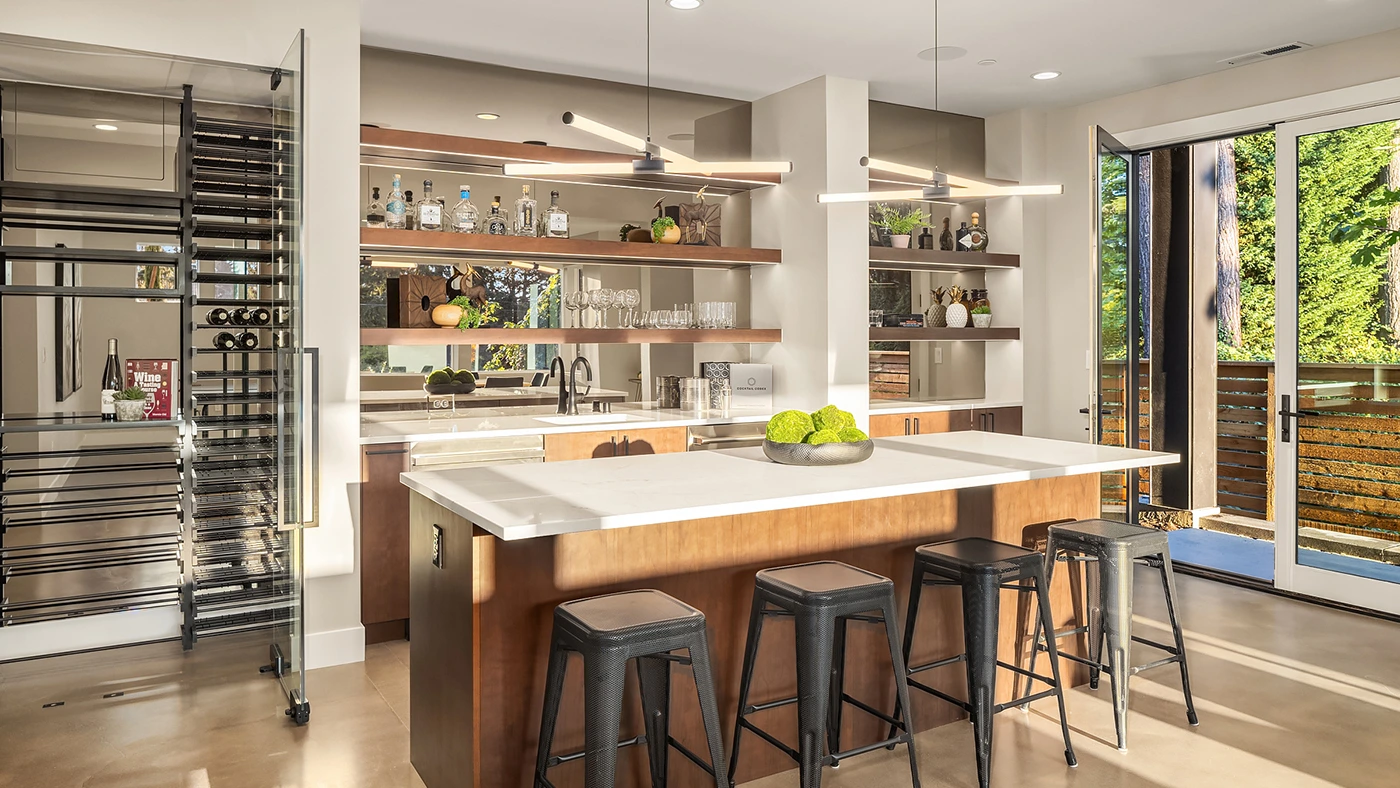
The island is the kitchen’s social center. Sized to accommodate seating on the living-room side and prep on the kitchen side simultaneously — the two activities don’t conflict. The stone countertop carries a subtle movement that gives the island presence without pattern overload.
Considering a Project?
The Work Begins With One Conversation
We hold a limited number of consultations each month and are selective about the projects we take on. If you’re ready to discuss yours, we’d like to hear about it.
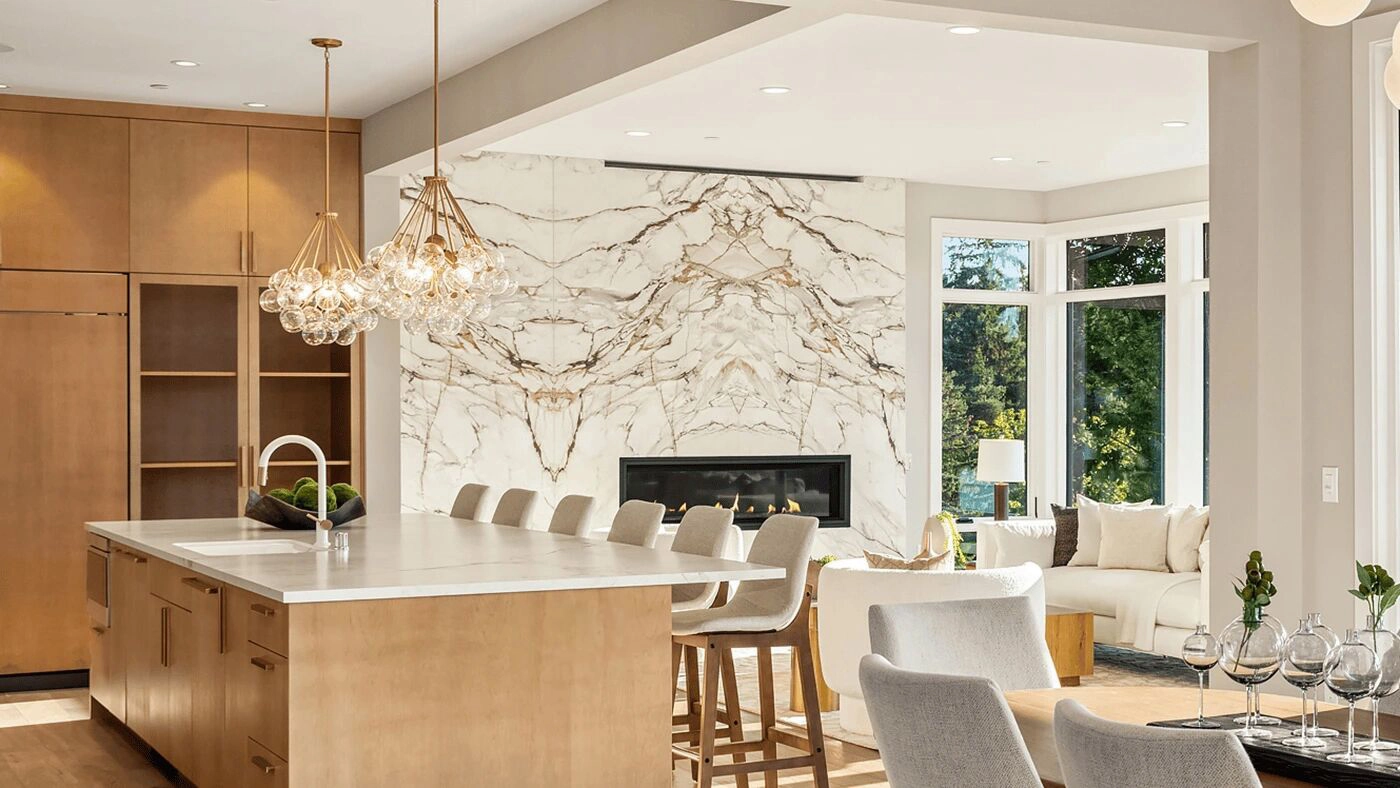
The kitchen and living zone operating as one room — the boundary between them is material, not structural.
The Challenge
Custom at Every Scale
Off-the-shelf cabinetry reads as off-the-shelf. The challenge was achieving a fully custom look at a scope that served the whole home — not just the kitchen — without the timeline and cost of a full mill order. The solution was a hybrid: custom-dimension cabinet boxes with site-built detail work at the critical visible points.
The open-concept layout introduced its own set of constraints. The kitchen had to look finished from multiple angles, including from the living area fifteen feet away. That meant every cabinet face, every appliance panel, every hardware selection was evaluated from both near and far.
“A kitchen is the one room in the house where function and design are genuinely inseparable.”
Our Design Approach
How We Designed the Kitchen
We started with the workflow — how the client actually cooks, where they prep, where they plate, how many people are typically in the kitchen at once. That map determined the island dimensions, the appliance placement, and where counter space had to be prioritized versus where it could yield to storage.
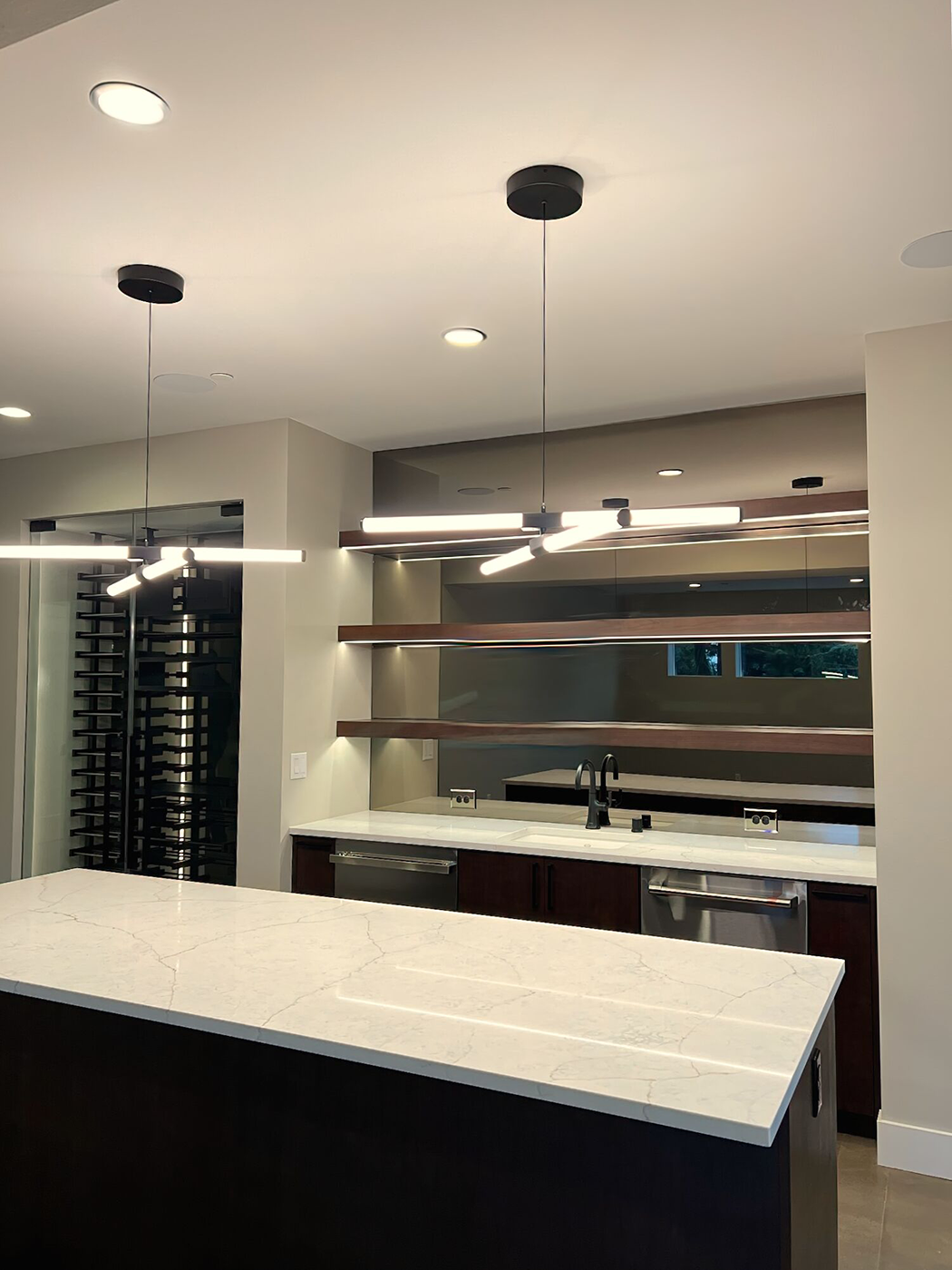
Lighting was specified in three layers: ambient (recessed, dimmable), task (under-cabinet LED at all prep surfaces), and pendant (over the island, selected for sculptural contribution and task capability simultaneously). A kitchen with only overhead lighting is a kitchen that doesn’t work after 5pm.
The transition to the living area was handled through material continuity — the flooring runs uninterrupted from kitchen through living, the ceiling height is consistent, and the palette carries through. The two zones are distinct in function but unified in material. The effect is a home that reads as designed, not assembled.
Location
Bellevue, Washington
Project Type
Full Interior — Kitchen Focus
Style
Modern, custom cabinetry
Key Features
White stone island, ceiling-height cabinetry
Palette
White, warm wood, brushed nickel
Scope
Full interior design and custom cabinetry
Common Questions
Frequently Asked
Intent. A renovated kitchen replaces what was there with something newer. A designed kitchen starts with how the client actually lives and cooks, then builds every decision — layout, cabinet configuration, lighting placement, material selection — around that specific program.
Around the workflow, not the room. The island has to work from the kitchen side (prep, appliance access, sink if applicable) and from the living side (seating, conversation, visual anchor). Minimum 42 inches of clearance on all working sides — 48 inches if two people cook simultaneously.
Start with the door profile — flat-front full-overlay is the current standard for modern kitchens. Then hardware: one consistent finish throughout, sized appropriately to the drawer and door dimensions. Upper cabinets to ceiling height if the ceiling allows it.
Stone — quartzite, marble, or quartz engineered — for a primary island with a sink or heavy prep use. Quartzite outperforms marble for scratch and acid resistance while maintaining the natural movement that quartz lacks. The right answer depends on how the surface will actually be used.
Design it to be seen from every angle. In an open floor plan, the kitchen is visible from the living area, the dining area, and the entry — all simultaneously. Every cabinet face, appliance panel, and hardware selection is evaluated from distance, not just from within the kitchen.