

Japandi Interior Design in Seattle
Our Services
Explore our expert interior design, architecture, and custom furniture services to create a space uniquely yours. Let’s start your transformation today!

Get In Touch
If you are looking for a collaborative team that loves your space and is your steadfast design advocate, we’re a fabulous fit for you!
Japandi is the design language that happens when two minimalist traditions talk to each other. Japanese wabi-sabi — the beauty of imperfection, the value of things worn by use — meets Scandinavian hygge — warmth, coziness, the comfort of well-made objects. The result is spaces that are quiet without being cold, simple without being sparse.
The Core Principles of Japandi Design
Japandi spaces are defined by restraint, natural materials, and a particular quality of calm. Furniture is low to the ground, with clean lines and no unnecessary detail. The palette is muted — warm whites, soft greys, clay, deep forest tones. Materials are natural and tactile: wood with visible grain, stone with variation, linen and cotton and wool. Nothing is synthetic. Nothing is shiny.
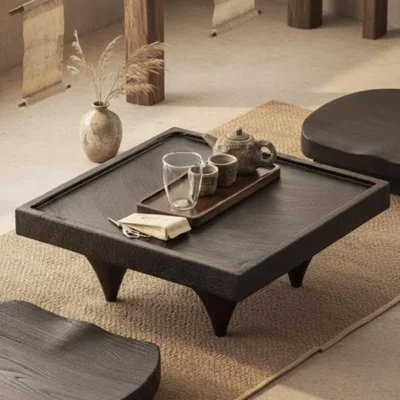
Why Japandi Works in the Pacific Northwest
The Pacific Northwest has a native affinity for this aesthetic. The regional sensibility — quietness, quality, connection to nature, restraint — maps naturally onto Japandi principles. The landscape itself is Japandi: mist-softened, deeply green, horizontal and still. A Japandi interior in a Seattle or Bellevue home doesn’t feel imported; it feels like the interior finally matches the outside.
Japandi vs. Minimalism
Japandi is often confused with minimalism, but the distinction matters. Minimalism reduces. Japandi selects. A Japandi space can have a carefully chosen collection of objects on a shelf — each one with meaning, each one of quality — in a way that a minimalist space cannot. What Japandi excludes is anything without purpose: the decorative object that serves no function and carries no meaning, the material that looks good in a showroom but develops no character over time.


Frequently Asked Questions
Related Design Styles
Warm Modern • Organic Modern • Biophilic Design • Transitional
