

The Psychology of Home Design: Why Your House Looks Beautiful But Doesn’t Feel Like Home
Beautiful homes feel wrong when they satisfy your eyes but fail your nervous system. Environmental psychology research — including Roger Ulrich’s landmark 1984 study at Texas A&M — shows that humans process spatial environments in milliseconds, well before aesthetic judgment engages. Rooms with poor proportions, harsh acoustics, or flat lighting trigger subtle stress responses even when the finishes are flawless.
Our Services
Explore our expert interior design, architecture, and custom furniture services to create a space uniquely yours. Let’s start your transformation today!

Get In Touch
If you are looking for a collaborative team that loves your space and is your steadfast design advocate, we’re a fabulous fit for you!
A couple in Bellevue reached out last year after completing a $400K renovation with a different firm. The house was objectively stunning. Professional photos, clean lines, perfectly coordinated palette. They hated being in it.
They couldn’t explain why. “Everything looks right,” she said. “But I don’t feel anything when I walk in.” Her husband added: “It feels like we’re living in someone else’s house.”
This is more common than most designers will admit. And it has almost nothing to do with the quality of the finishes or the skill of the original design. It’s about something deeper — the psychology of how humans experience space.
Your Home Is a Nervous System Response
Before you consciously register whether a room is beautiful, your nervous system has already decided whether it’s safe. Roger Ulrich’s 1984 study, published in Science, demonstrated this powerfully: gallbladder surgery patients with a view of trees recovered in an average of 7.9 days, while those facing a brick wall took 8.7 days. The tree-view patients also required less pain medication and were discharged sooner. If a window view measurably accelerates healing, imagine what the proportions, light, and materials of the room you spend every evening in are doing to your baseline stress level.
Environmental psychologists Rachel and Stephen Kaplan at the University of Michigan expanded on this, showing that humans process spatial environments in milliseconds — well before aesthetic judgment kicks in.
Your body responds to ceiling height, light quality, sight lines, acoustic properties, and spatial proportions. A room can be filled with $50K in furniture and still trigger a subtle stress response if the proportions are off, the acoustics are harsh, or the lighting creates the wrong ambiance.
This is what that Bellevue couple was experiencing. Their nervous system knew something was wrong. Their eyes couldn’t find it.

The Five Psychological Needs of a Room
After 25 years of designing homes across Kirkland, Bellevue, and the Eastside, I’ve identified five psychological needs that every room must satisfy before aesthetics even matter:
1. Prospect and Refuge. Geographer Jay Appleton introduced this framework in 1975, and a 2016 meta-analysis by Dosen and Ostwald confirmed it across multiple studies: open views are consistently associated with higher preference ratings in built environments, while moderate enclosure creates the sense of safety we instinctively seek. In practical terms, humans need both the ability to see (prospect) and the ability to feel protected (refuge). This is why a sofa facing a window with a wall behind it feels right, and a sofa in the middle of a room with its back to the door feels wrong. Every room layout I design starts with this principle, not with where the furniture catalog says the sofa should go.
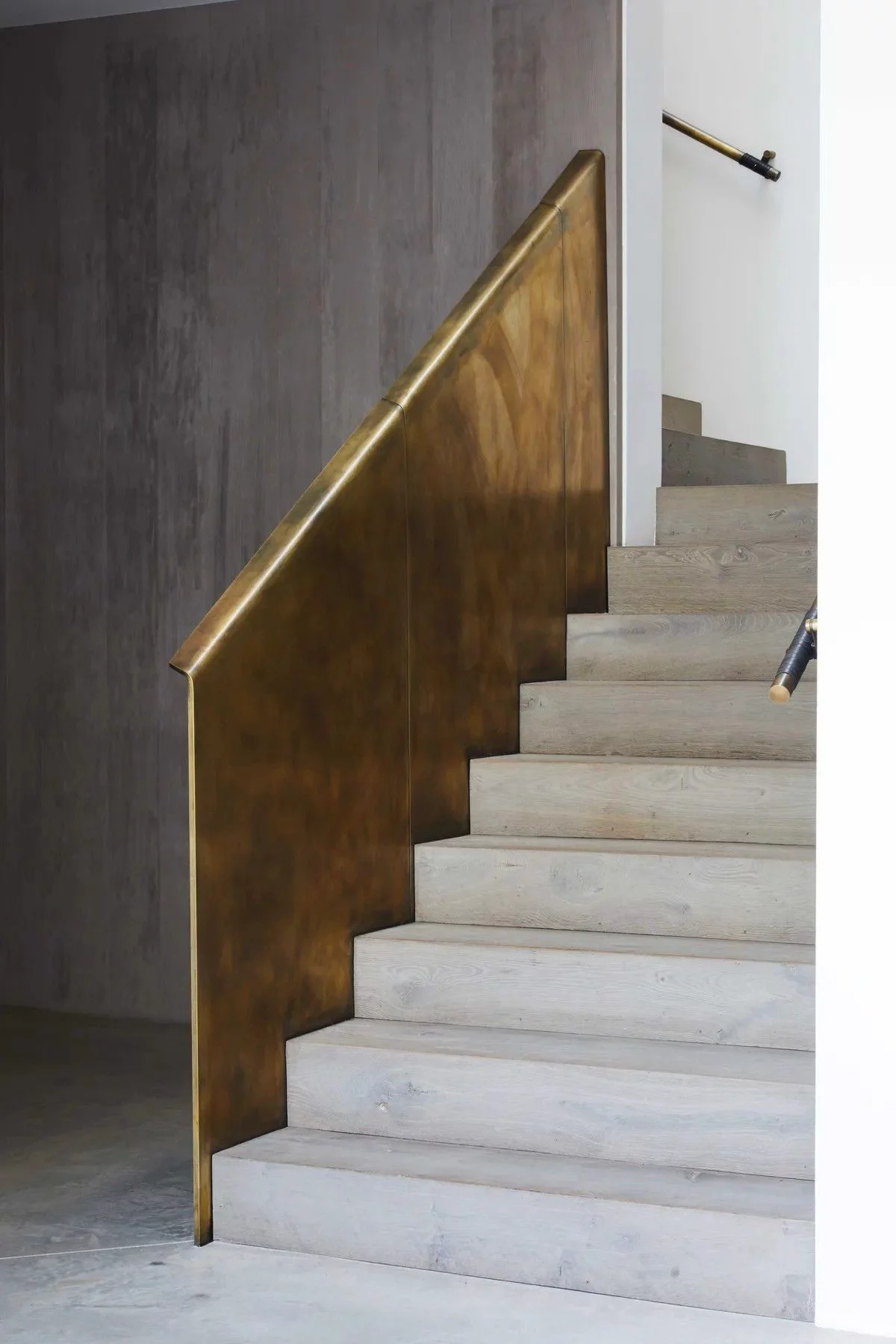
2. Sensory Calibration. A room that’s all one texture — smooth walls, smooth counters, smooth floors — feels psychologically flat. Your brain needs varied sensory input to feel engaged. This is why lighting design is so critical — it’s not just about illumination, it’s about creating varied light temperatures and intensities that give your brain something to process.
3. Biophilic Connection. Biophilia — a term coined by E.O. Wilson in 1984 to describe our innate bond with nature — isn’t satisfied by putting a fiddle leaf fig in the corner. A 2023 systematic review of biophilic workplaces found that access to outdoor environments or well-designed indoor nature elements (natural materials with visible grain, views to green space, natural light patterns that shift throughout the day) measurably reduces stress and improves wellbeing. In the Pacific Northwest, our soft diffused light is actually an advantage here — it makes natural materials glow.
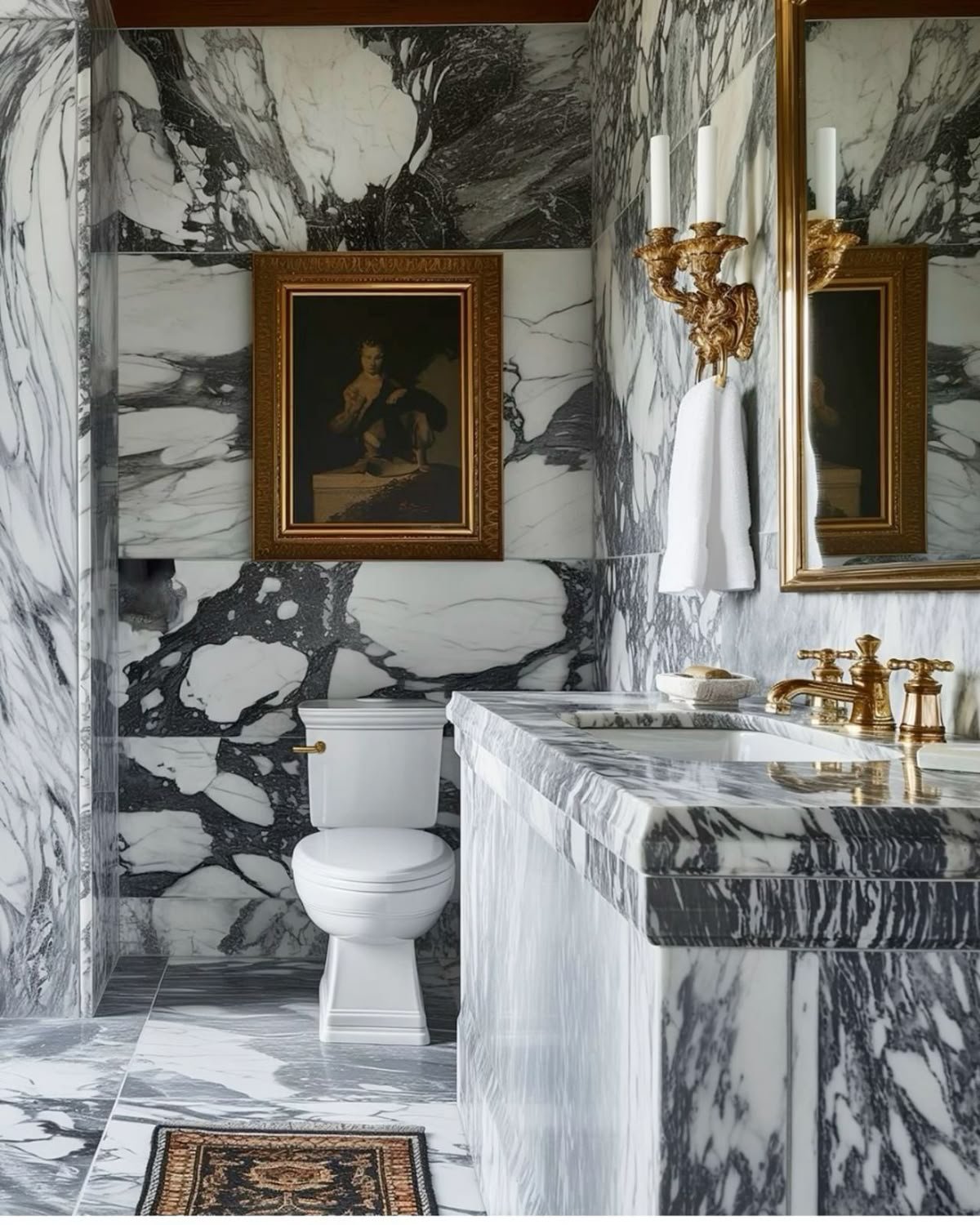
4. Acoustic Comfort. This is the most overlooked psychological need in residential design. Hard surfaces everywhere — marble floors, glass walls, concrete counters — create a subtle echo that your nervous system reads as “public space, not home.” Your brain relaxes when it hears the acoustic signature of a room with soft surfaces, varied textures, and absorption.
5. Spatial Narrative. Rooms need to tell a story about movement. Where do you enter? Where does the room invite you to go? Where do you end up? Rooms that feel wrong often have no narrative — you walk in and there’s no clear destination, no invitation, no journey. Just… a room with things in it.
Why “Pinterest Perfect” Fails
Social media has created a generation of homes designed to photograph well rather than live well. The problem is that photography and human experience are fundamentally different. A camera captures a flat image from one angle. A human being moves through three-dimensional space, processing light from every direction, feeling temperature, hearing reflections, sensing proportions with their entire body.
A room that photographs beautifully in one carefully lit shot can feel completely sterile when you’re standing in it at 7 PM on a Tuesday. This is why I tell my clients: stop showing me Instagram screenshots. Show me how you want to feel in the room. That’s a radically different starting point, and it leads to radically different results.
The Design-Build Connection to Psychology
Here’s something most interior designers won’t tell you: the psychological quality of a space is determined as much by its structure and proportions as by interior design. Ceiling heights, window placements, room proportions, and structural sight lines create the foundation that no amount of furniture or finishes can override.
This is exactly why we operate with building design and interiors under one team. When I see that a room’s proportions are creating that “something feels off” response, I can adjust the structure — drop a ceiling plane, widen a doorway, add a window — rather than trying to mask it with decor. Our construction team at ARIID Build executes those structural changes because they’re part of the same organization.
It sounds simple, but most design firms can’t do this. They inherit the structure and try to design around its psychological problems instead of fixing them.

How to Test Whether Your Home “Works” Psychologically
Before you call a designer, do this simple test in every room:
The 30-second test: Walk into the room and stand still for 30 seconds. Don’t look at the decor. Just notice how you feel. Are your shoulders dropping or rising? Do you want to stay or leave? Does the room invite you deeper or hold you at the doorway?
The evening test: Sit in the room at 8 PM with only the room’s own lighting (no TV, no phone screen). Is it pleasant? Or do you immediately want to turn on more lights, leave, or grab your phone for stimulation?
The sound test: Clap once. Does the room ring or absorb? A ring means hard surfaces are dominating. Your nervous system is processing that acoustic harshness whether you consciously notice it or not.
If your home fails these tests, the fix isn’t new throw pillows. It’s a conversation about the foundational design of the space — proportions, light, materials, acoustics — the things that shape how you feel before you even notice what’s in the room.
What Happens When You Design for Psychology First
That Bellevue couple? We didn’t redo their finishes. We adjusted three things: we lowered a section of their living room ceiling to create intimacy (it had been vaulted to 14 feet with no variation), we replaced their recessed cans with layered ambient lighting, and we added acoustic panels concealed behind fabric wall treatments. The materials and furniture stayed — though when furnishing is part of the same design conversation, we can address these issues from the start rather than retrofitting.
She called me two weeks later. “I finally feel like I can breathe in my own living room.”
That’s what designing for psychology produces. Not a room that photographs well — a room that feels like home.

Written by
Ariana Adireh Anderson
Frequently Asked Questions
Your nervous system processes spatial environments before your conscious mind evaluates aesthetics. Rooms with poor proportions, harsh acoustics, flat lighting, or no clear spatial narrative can feel “off” even when the finishes are high-end. The fix is addressing the psychological structure of the space, not adding more decor.
Biophilic design addresses humans’ innate need for connection to natural elements. It goes beyond adding plants — it includes natural materials with visible grain and variation, views to green space, natural light patterns, and proportions that echo natural forms. Homes that incorporate biophilic principles consistently report higher resident satisfaction and reduced stress.
Environmental psychology research confirms that spatial design significantly impacts stress levels, sleep quality, social connection, and overall wellbeing. Elements like lighting temperature, acoustic comfort, spatial proportion, and material texture all influence how your nervous system responds to your home environment.
You might also like
Interior Design Cost in Kirkland & Bellevue
The Primary Bath That Earned Us an NKBA Award
Interior & Architectural Design Process
+All pricing shown is for general reference only and does not constitute a formal quote. Costs vary based on scope, materials, and project requirements. Contact us for a customized proposal.
Every project is led personally by Ariana Adireh Anderson — 2x National NKBA Award-winning designer and principal of Ariana Designs & Interiors in Kirkland, WA.
Get In Touch
If you are looking for a collaborative team that loves your space and is your steadfast design advocate, we’re a fabulous fit for you!
