
Portfolio · Seattle, Washington
Life on the Water, A Floating Home
A floating home designed from the inside out — where every room faces the water and every material earns its place on a moving foundation.
Floating home design is its own discipline. The structural reality — a home that floats, that moves with the water, that has hard constraints on weight, moisture tolerance, and material fastening — shapes every design decision. This Seattle floating home was designed with those constraints as the starting point, not an afterthought.
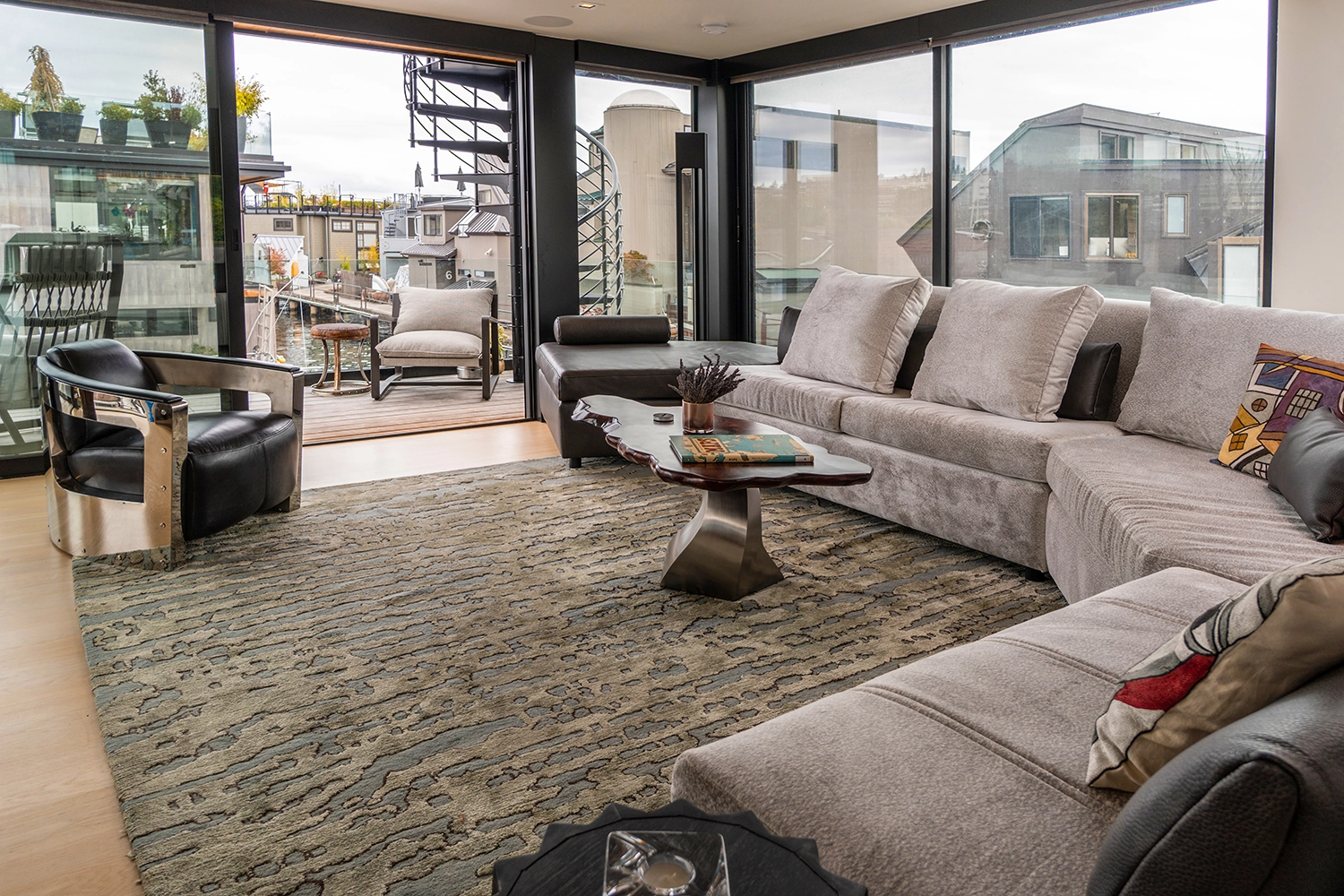
The result is an interior that reads as curated rather than constrained. The panoramic living room, the waterfront home office, the carefully considered bedroom — each room reflects the specific pleasures and requirements of life on the water.
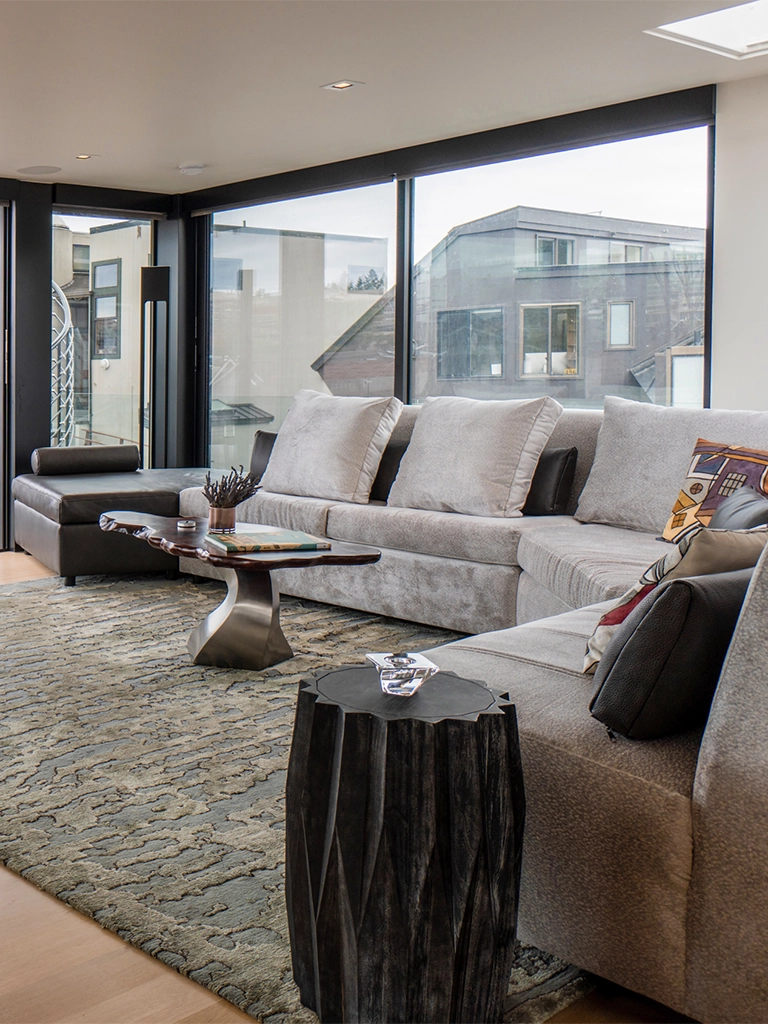
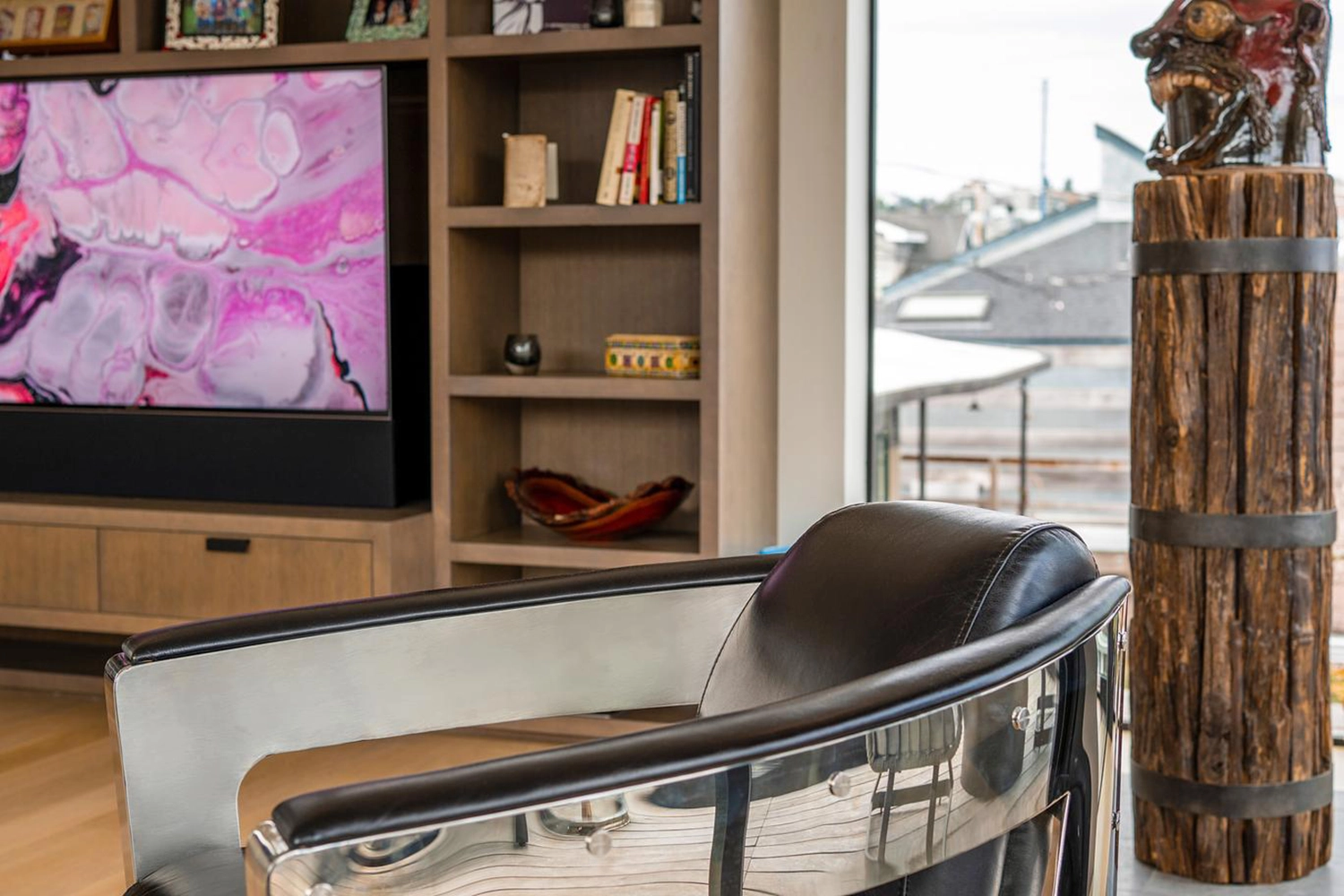
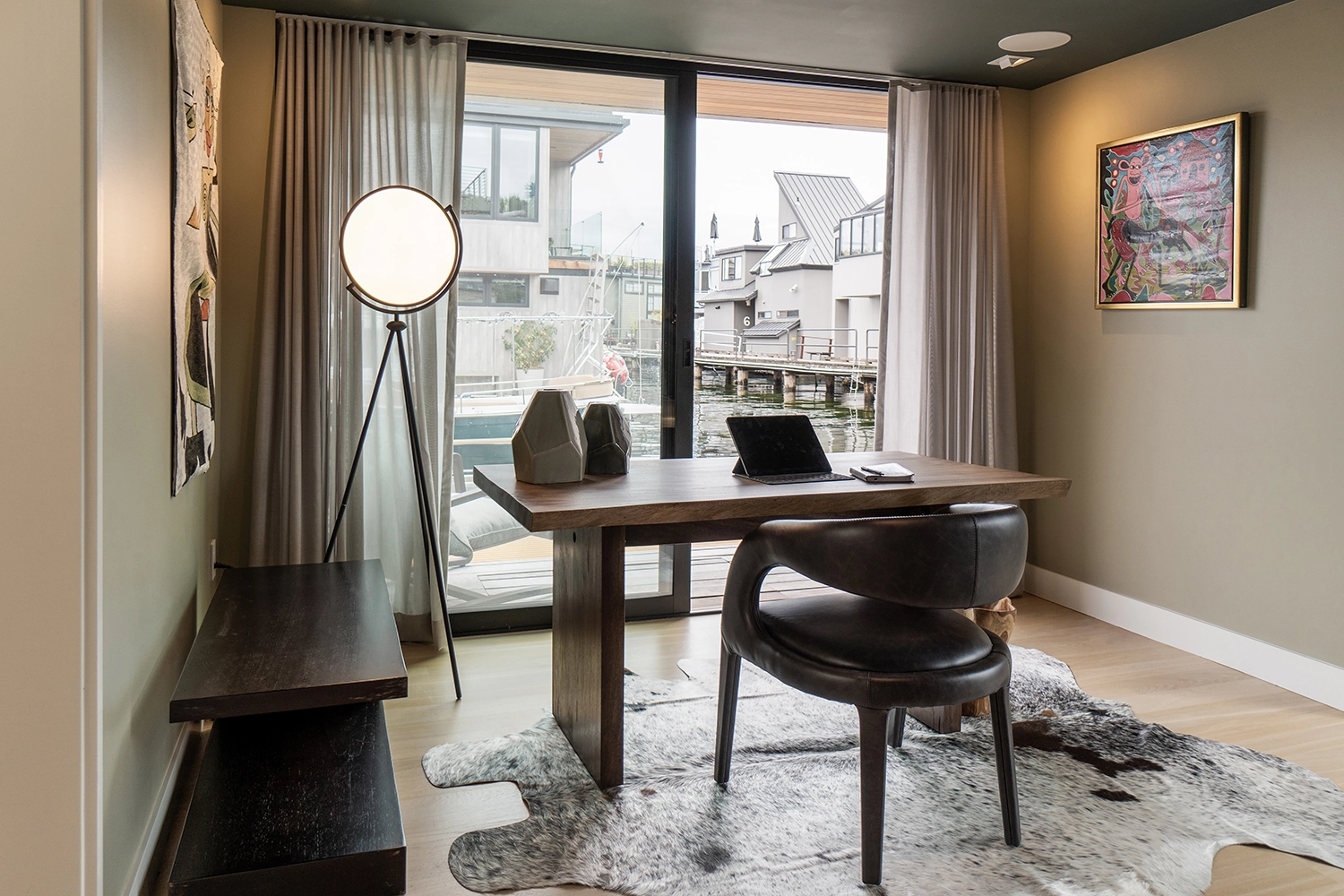
Designed for the Water
Material selection on a floating home is non-negotiable. Moisture-tolerant finishes, fastening systems that account for movement, weight distribution that doesn’t compromise the hull’s stability. These aren’t aesthetic constraints — they’re structural ones. The design starts with what can go in the space, then works toward what should.
Lighting on the water is its own experience. The ambient light shifts with the water, the sky, and the time of day in ways that a land-based home never does. Lighting was designed to layer with the natural conditions — warm artificial sources that complement rather than compete with the constantly changing exterior light.
Considering a Project?
The Work Begins With One Conversation
We hold a limited number of consultations each month and are selective about the projects we take on. If you’re ready to discuss yours, we’d like to hear about it.
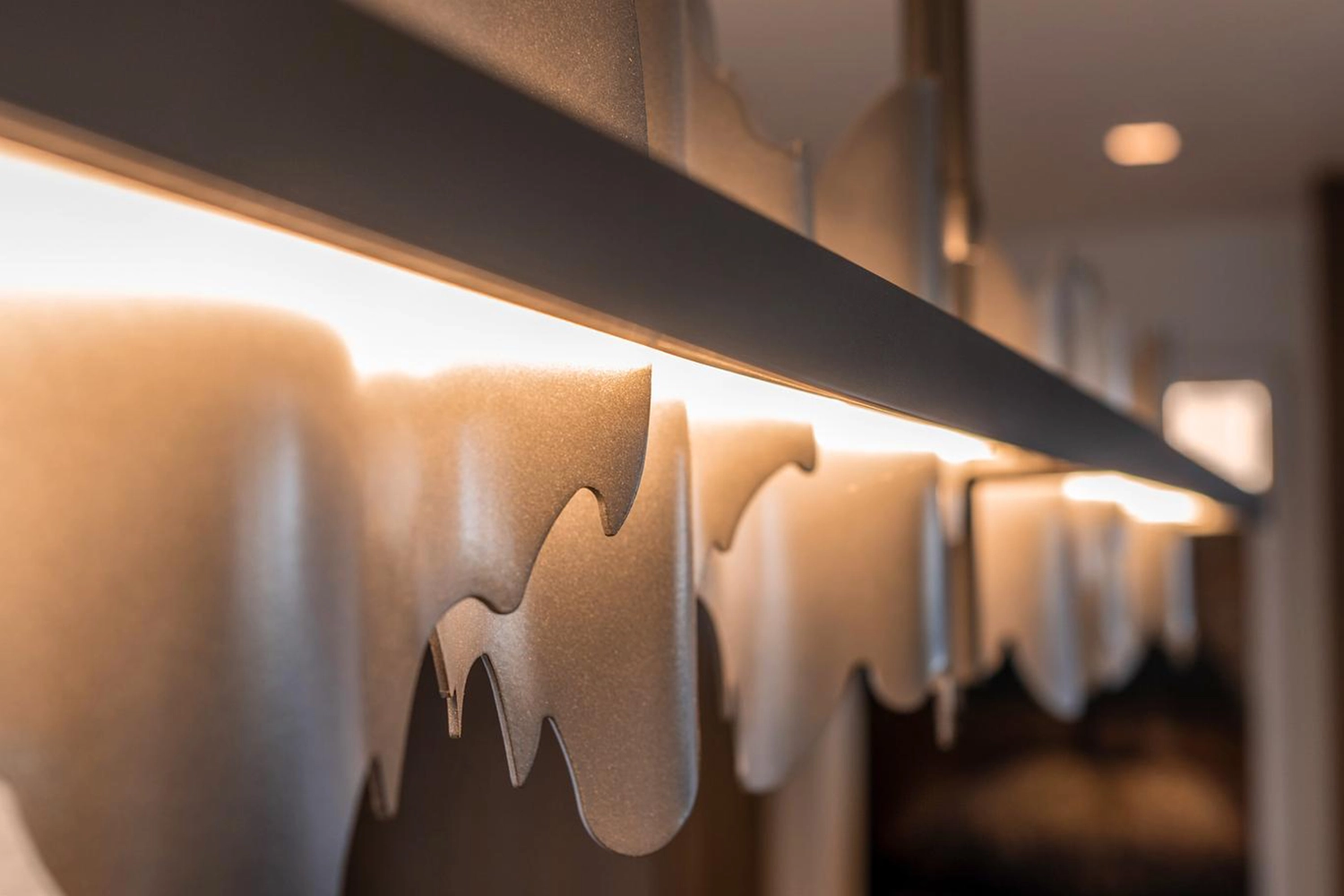
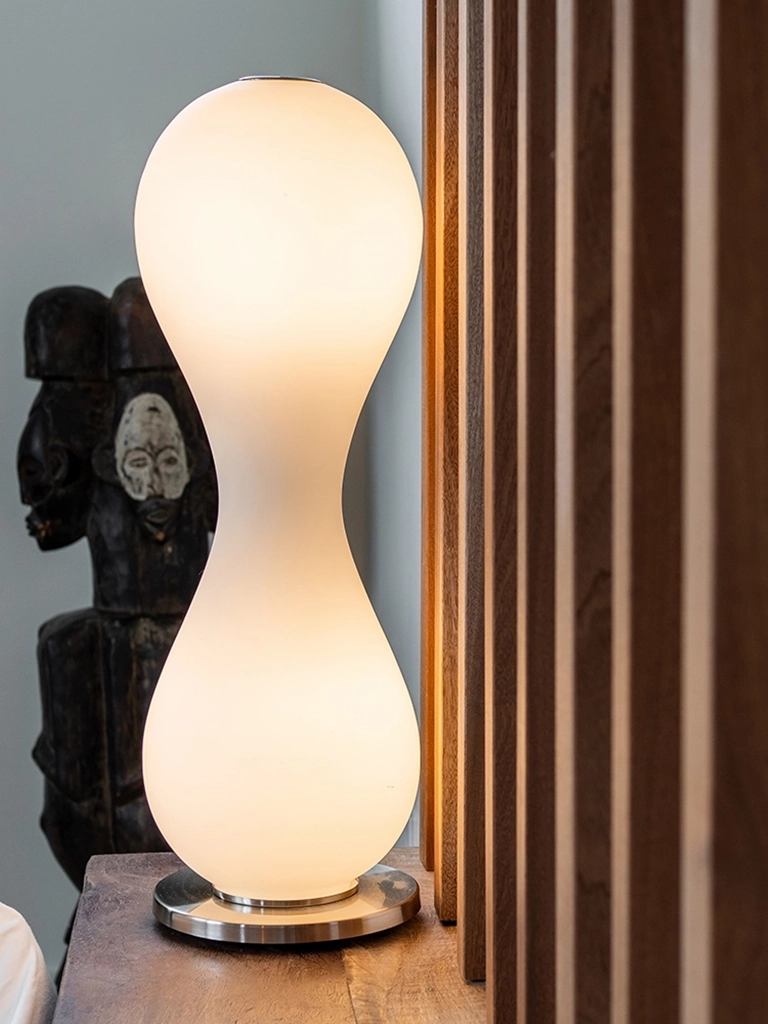
A wave-inspired lighting fixture — a nod to the foundation the home rests on.
The Challenge
The Challenge: Design on a Moving Foundation
A floating home moves. Not dramatically — but enough that every fastening detail matters, every heavy piece of furniture needs to be considered in terms of its placement and anchoring, and every material that can’t tolerate moisture is a liability. The design has to be beautiful and technically sound simultaneously.
The views are the dominant feature of every room — but they change with the position of the home on the water, the season, and the time of day. Furniture placement, window treatment strategy, and lighting all had to account for a view that is never the same twice. That variability became an asset rather than a problem.

“A floating home teaches you that design constraints aren’t obstacles — they’re the brief.”
Our Design Approach
How We Designed Around the Water
We started with a structural audit — understanding exactly what the hull could support in terms of weight distribution and where moisture mitigation was most critical. That informed the material spec entirely. Every surface material was evaluated for moisture tolerance before aesthetics.
The furniture plan was developed around the view corridors. On a floating home, the panoramic window lines are the dominant feature — every seating position, every desk placement, every bed orientation was made in relation to the water. The furniture plan and the view plan are the same document.
Accent objects — the wave lighting fixture, the sculptural pieces, the art selections — were chosen for their ability to echo the water context without being literal about it. The goal was a home that clearly belongs on the water without being nautical-themed. The connection is material and atmospheric, not decorative.
Location
Seattle, Washington
Project Type
Floating Home Interior Design
Style
Modern, water-context aware
Key Features
Panoramic water views, moisture-tolerant materials, wave lighting fixture
Palette
Light grey, warm wood, natural tones
Scope
Full interior design and material specification
Common Questions
Frequently Asked
Materials and movement. Every finish has to tolerate a marine-adjacent moisture environment. Every heavy element has to be positioned and anchored with weight distribution in mind. And the views — which are the dominant feature of any floating home — change constantly as the home moves on the water. You design around a moving context, not a fixed one.
Moisture tolerance is the primary filter. Solid wood is problematic — it moves with humidity. Engineered wood performs better. Metals need rust protection. Upholstery needs to be resistant to the ambient moisture level of a water-adjacent environment. Once you’ve established what can go in the space, you select the best-performing options aesthetically.
Weight distribution first, then view corridors. Heavy pieces go low and centered. The furniture plan is built around the window lines — every primary seating position should have a connection to the water view. On a floating home, you never turn your back on the view if you can avoid it.
Layer warm artificial light that complements rather than competes with the exterior conditions. On the water, the ambient light shifts dramatically across the day and season. Interior lighting should read as warm against those changing exterior conditions — incandescent-equivalent Kelvin temperatures, dimmable at every zone, so the interior light can be adjusted to the exterior conditions at any given moment.
Yes — and the constraints often produce better design. When you can’t make arbitrary decisions (because weight, moisture, and movement limit your options), every decision that makes it through becomes intentional. The floating homes we’ve worked on tend to have a design coherence that’s harder to achieve when every option is on the table.
The work in this portfolio is the standard we hold ourselves to on every project — not just the celebrated ones.
Begin Your Project
Your home should stop you. Every time you walk in.