Portfolio · Suncadia, Washington
The Mountain Spa: Suncadia Sanctuary
A master bathroom in a mountain retreat should feel like the reason you stayed another night.
The design started with what the clients actually used: a soaking tub on ski weekends, a fast morning routine, a long shower when the weather turned. Those three uses created the floor plan. The aesthetics followed.
The existing bathroom was functional and outdated. White tile, standard builder fixtures, overhead fluorescent lighting — a palette that reads clinical in mountain light, cold and diffused in winter, hard and high-angle in summer. The room needed depth enough to hold at both extremes.


Three Uses, One Floor Plan
The freestanding matte black soaking tub became the focal point, repositioned to face the window rather than a wall. Against stone tile with warm mineral tones, it anchors the room. Matte black absorbs rather than reflects — the right call for a space with varied mountain light conditions.
The walk-in shower was redesigned with a heated LED bench built into the back wall. Not a cold stone seat on a ski morning — the bench is heated. The LED element is embedded in the stone so the bench glows at the seat edge rather than from overhead.
Considering a Project?
The Work Begins With One Conversation
We hold a limited number of consultations each month and are selective about the projects we take on. If you’re ready to discuss yours, we’d like to hear about it.

The Challenge
The Challenge: Hold at Every Light
Mountain light changes dramatically across seasons — cold and diffused in winter, hard and high-angle in summer. White tile reads clinical at both extremes. The space needed a palette with enough depth to hold correctly in every condition without tipping dark or beige.
The floor plan also needed work: the original soaking tub sat against a wall as an afterthought, the shower had no bench, and two people using the bathroom simultaneously had no clear zones. Three problems, one redesign.


“The heated bench is the feature guests ask about every time.”

Our Design Approach
How We Designed It
Stone tile runs floor to shower surround. The selection was made for its tone at low winter light — a cool gray with slight brown undertones that reads as warm without going beige. Dense stone that doesn’t absorb water or cleaning products between uses, and doesn’t crack with the thermal cycling a mountain home delivers.
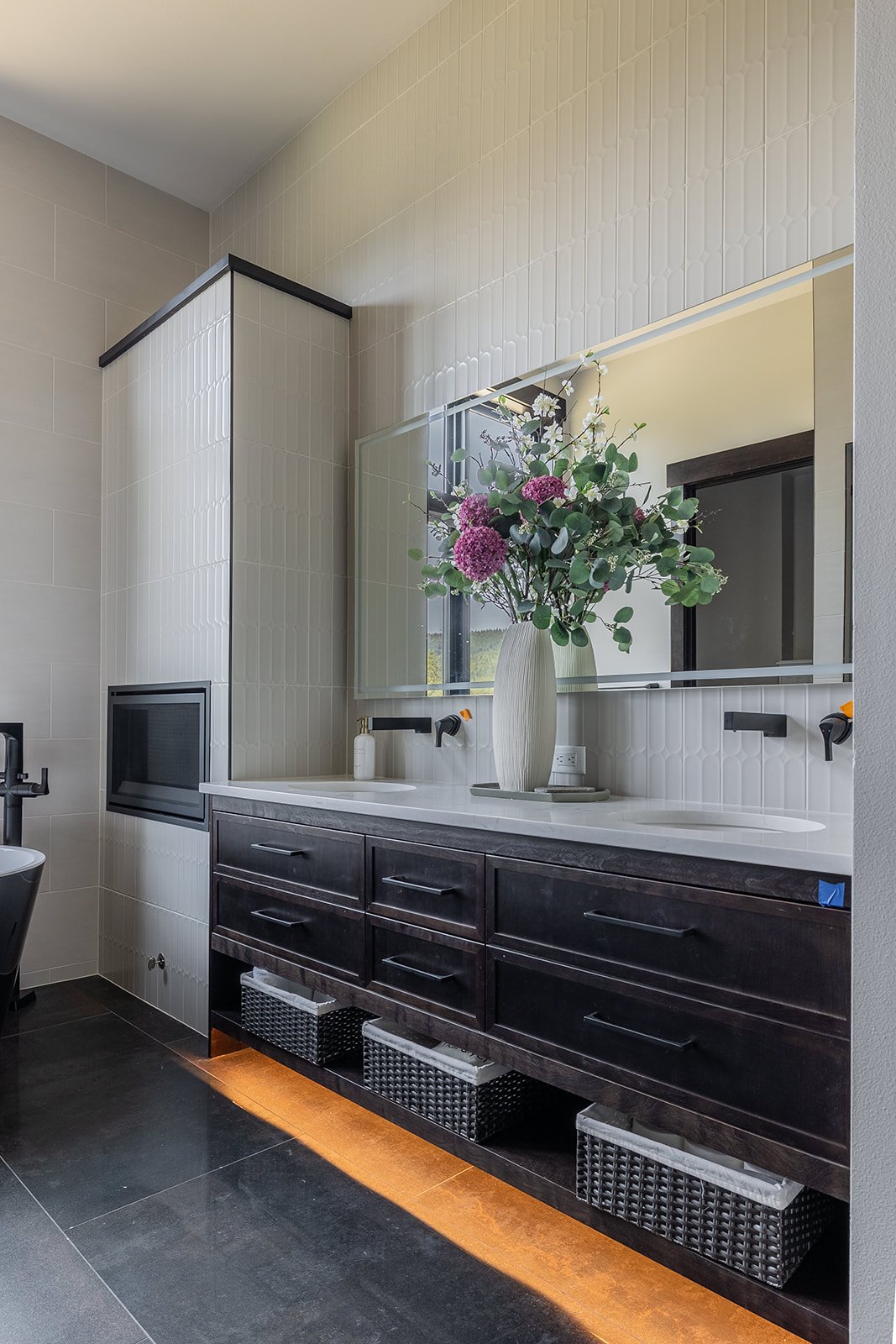
The dark wood floating vanity with dual vessel sinks creates the zone separation a two-person morning routine requires. Two people can use the room simultaneously without crossing. The zone logic came directly from how the clients described their mornings — mapping those paths over the floor plan made the solution obvious.
Lighting was layered: the LED bench provides task-level warmth in the shower, vanity lighting sits at face level rather than overhead, and ceiling fixtures supplement rather than lead. In a mountain bathroom, the quality of light matters as much as the volume of it.


Project Type
Master Bathroom Design
Location
Suncadia, Washington
Style
Mountain Spa / Alpine Modern
Features
Heated LED bench, freestanding matte black tub, stone tile
Vanity
Dark wood floating with dual vessel sinks
Scope
Full interior design — fixtures, tile, lighting, vanity
Common Questions
Frequently Asked
Matte black absorbs rather than reflects, which is the right call for a room with varied light conditions. A polished chrome or white tub creates glare at certain times of day and reads as clinical in others. Matte black reads consistently across light temperatures — winter morning or summer afternoon, the tub holds.
An LED bench is a shower seat with lighting embedded in the stone rather than mounted overhead. The glow comes from the seat edge — you see warmth before you see a fixture. In a mountain home, where showers happen after cold days outside, a bench that radiates warmth changes how the shower functions. Ours is also heated at the seat surface, which is the detail guests ask to explain.
Dense stone doesn’t absorb water or cleaning products the way porous stone does — in a room that sits between uses rather than getting daily attention, low-maintenance matters. Tone behavior matters because mountain light changes dramatically across seasons: what reads warm in summer can read cold in December. We chose a cool gray with brown undertones that holds at both extremes.
Zone separation is the answer, not square footage. In this bathroom, the floating vanity with dual vessel sinks creates clear left and right zones. The soaking tub and shower are positioned with distinct approach paths. When you map a morning routine for two people and lay those paths over the floor plan, the zones become obvious — it’s not about adding space, it’s about not crossing it.
Because the view is the reason you’re in Suncadia. A tub against a wall faces a wall. Repositioning to face the window means the person using it faces the mountain landscape — which changes the entire experience of the room. It also made the tub the visual anchor of the bathroom when you walk in, rather than something discovered in a corner.
The work in this portfolio is the standard we hold ourselves to on every project — not just the celebrated ones. We take on a limited number of engagements each year, which means the projects we commit to receive our full attention from the first conversation through the final installation. If you're considering a renovation, a new build, or a full redesign, tell us about your home. We'll tell you honestly whether we're the right fit — and what working together would look like.
Begin Your Project
Your home should stop you. Every time you walk in.